Il Borro Wedding Guide (2027): Pricing, Capacity & Everything to Know
A wedding weekend in a restored Tuscan village, with 2027 accommodation packages, the real food-and-drink commitment, space for up to 195 overnight guests and a covered reception option for 250.
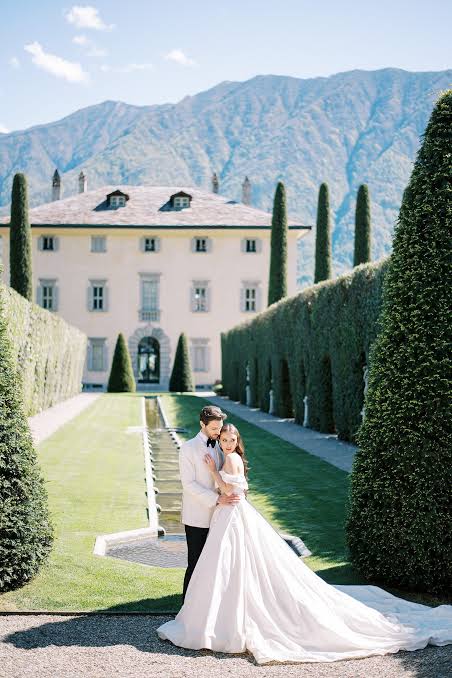

Il Borro is a wedding venue for couples who want their guests to spend a few days together, not simply arrive for dinner. The Ferragamo-owned estate near San Giustino Valdarno combines a medieval village, a grand private villa, separate country houses, restaurants, vineyards and pools. The wedding can move between formal gardens and terraces while the stay feels more like taking over a small destination than renting one house.
That scale is the attraction, but it also shapes the bill. In 2027, the two-night Medieval Village package starts at €90,000 in low season, with a separate €25,000 estate food-and-beverage minimum. For a high-season celebration using the 160-person Relais & Châteaux accommodation package, the equivalent starting commitment is €210,000 for two nights or €322,000 for three, before the external wedding caterer, separately reserved event spaces and production.
The most important distinction is between accommodation, entertaining and privacy. The estate can accommodate up to 195 guests across its full wedding inventory, but those guests are spread across several accommodation clusters, and the room package does not automatically make every restaurant, pool or common area private. In practice, the wedding works best when the rooming plan and the event-space plan are designed together.
Il Borro at a Glance
- Location: San Giustino Valdarno, near Arezzo, in Tuscany’s Valdarno countryside
- Venue type: Restored medieval village, private villas and working wine estate with a Relais & Châteaux hospitality operation
- 2027 accommodation packages: €90,000–€274,000 across the two- and three-night packages; intimate villa-only arrangements are separately quoted
- Lowest listed commitment: €115,000: two-night low-season Medieval Village package plus its estate food-and-beverage minimum, before other wedding costs
- High-season starting commitment: €210,000 for two nights using the Relais & Châteaux package, including the estate food-and-beverage minimum but not the external wedding caterer
- Pricing seasons: Low: March, April except Easter weekend, and November. High: May through October
- Minimum stay: Two nights for standard event packages; three nights for the 20-person intimate villa package
- Accommodation: 102 guests in the Medieval Village package; 160 in Relais & Châteaux; 195 in Il Borro Toscana. Villa-only intimate option: 20
- Guest-stay requirement: All attendees are required to stay at Il Borro for the event period; nearby overflow is arranged when attendance exceeds estate capacity
- Covered seated reception: Amphitheatre: up to 250, with the final layout and weather-protection specification determining the setup
- Other reception figures: Tinaia: 100. Upper terrace: up to 300 as an outdoor event figure, not an approved 300-seat dinner plan
- Wedding catering: An external caterer is required for the wedding day; estate food-and-beverage minimums remain separate commitments
- Planner: Mandatory; the planner’s agency handles the booking process
- Outdoor music: Up to 70 dB until 10 p.m.; Relais & Châteaux and Toscana packages may continue to midnight at up to 60 dB
- Late party: Amphitheatre or Tinaia, separately hired; the 2027 terms specify no time or decibel limit in those designated spaces
- RoamRecs preferred size: Approximately 130–160 guests for a high-season residential wedding; a smaller low-season wedding uses a different cost structure
- Illustrative total budget: Approximately €480,000–€615,000 for 150 guests and three high-season nights, using the detailed model and exclusions below
The RoamRecs Take
Il Borro is strongest when the guest experience is the reason to spend more.
There is a real difference between sleeping at a wedding venue and having a place to inhabit for a weekend. Here, guests can have breakfast in different parts of the estate, cross into the village, take a cellar tour, spend time by a pool and meet again for dinner. The main villa gives the couple and close family a private residential base without limiting the wider wedding to a handful of bedrooms.
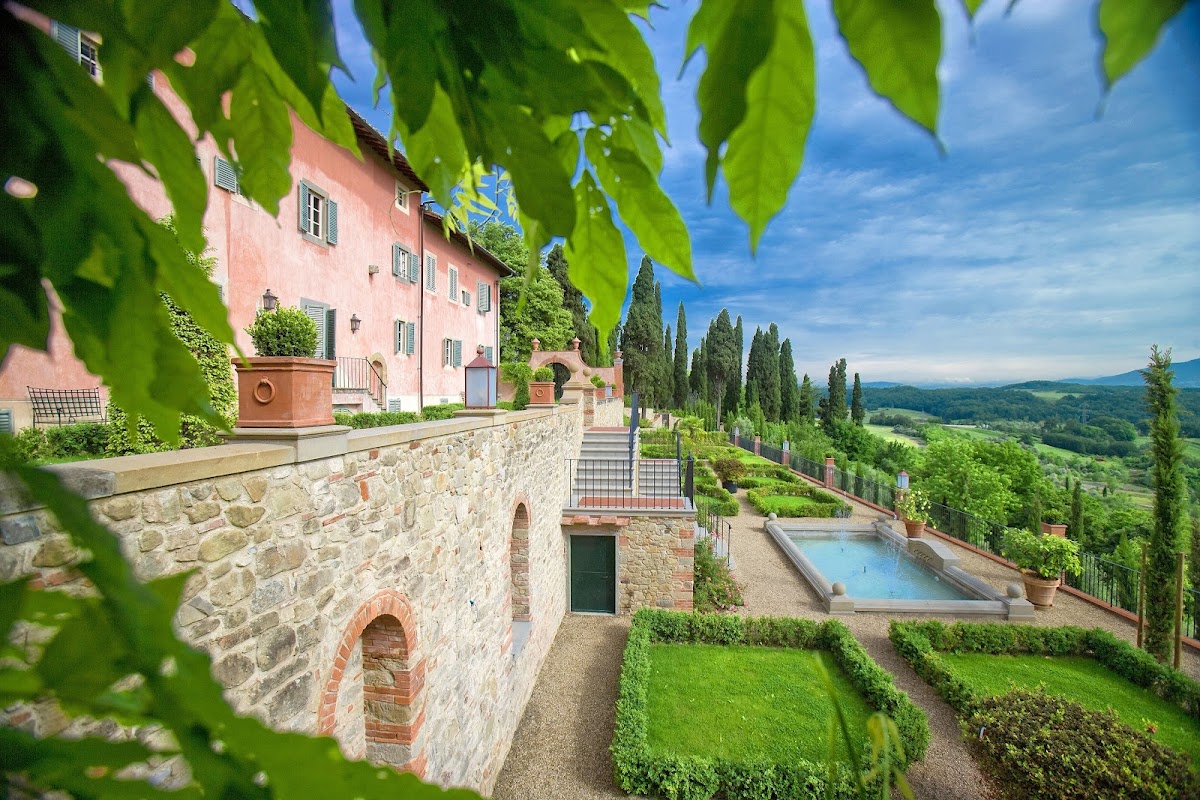
The setting also changes as the day develops. A ceremony in the gardens, drinks around the formal landscaping, dinner on a villa terrace and a late party in a dedicated event space need not feel like four versions of the same room. The contrast between the historic village and the villa’s more formal gardens gives the wedding a strong sense of place.
Our preferred high-season size is around 130–160 guests. That uses much of the Relais & Châteaux package’s accommodation while keeping the wedding below the Amphitheatre’s 250-person seated ceiling. It is an editorial sweet spot, not a venue minimum. At the upper end, the rooming list must genuinely work within 80 double bedrooms; a guest list with many single occupants can run out of rooms before it reaches 160 people.
The biggest drawback is not a lack of facilities. It is the number of separate commitments. A three-night high-season Relais & Châteaux booking starts with €252,000 for the stay and €70,000 in estate food and beverage. The wedding day still requires an external caterer, and important private event spaces cost extra. A smaller guest list does not proportionately reduce those fixed amounts.
The second tradeoff is the kind of togetherness on offer. This is a spread-out estate, not one compact hotel. Different accommodation groups have different breakfast arrangements and routes to the celebration. The full 195-person inventory also brings in the more independent I Borrigiani farmhouses, outside the Relais & Châteaux accommodation selection. For some families, that variety is welcome. For others, a uniform hotel-room experience would be easier.
The covered Amphitheatre is a meaningful advantage, but it changes the feel of the reception. Villa Il Borro’s interiors are not the rainy-day fallback, so a wet-weather version of this wedding should still feel intentional in a dedicated event space rather than like dinner has simply moved into the house.
Bottom line: We would choose Il Borro for a substantial, accommodation-led wedding with a professionally managed weekend around it. We would look elsewhere for a simple venue-only rental, flexible off-site guest lodging, a modest fixed budget, or an outdoor dance party that stays at full volume into the early hours.

How Much Does an Il Borro Wedding Cost?
The 2027 accommodation packages
These are totals for the whole two- or three-night stay, not nightly rates. The accommodation included in each tier is explained in the guest-stay section below.
- Medieval Village, up to 102 guests: Low season: 2 nights: €90,000; Low season: 3 nights: €119,000; High season: 2 nights: Individually quoted; High season: 3 nights: Individually quoted
- Relais & Châteaux, up to 160 guests: Low season: 2 nights: €135,000; Low season: 3 nights: €188,000; High season: 2 nights: €175,000; High season: 3 nights: €252,000
- Il Borro Toscana, up to 195 guests: Low season: 2 nights: €143,000; Low season: 3 nights: €200,000; High season: 2 nights: €192,000; High season: 3 nights: €274,000
Low season covers March, April excluding Easter weekend, and November. High season covers May, June, July, August, September and October. Easter weekend and dates outside those listed periods need a date-specific arrangement. The intimate Villa Il Borro option accommodates 20 guests and has a three-night minimum, with bespoke pricing.
The estate food-and-beverage minimum
The accommodation price is only the first part of the commitment. Each standard package also carries an estate food-and-beverage minimum, the same in high and low season.
- Medieval Village: Two-night estate F&B minimum: €25,000; Three-night estate F&B minimum: €45,000
- Relais & Châteaux: Two-night estate F&B minimum: €35,000; Three-night estate F&B minimum: €70,000
- Il Borro Toscana: Two-night estate F&B minimum: €40,000; Three-night estate F&B minimum: €85,000
A minimum spend is not an extra charge added on top of the same qualifying meals. It is the amount the estate expects you to spend on the applicable hosted food-and-drink services. If those services exceed the minimum, the higher amount becomes the relevant budget. Individual guests’ restaurant and bar purchases do not count toward it.
The wedding day is different: an external caterer is required, so that bill sits alongside the estate commitment rather than replacing it. The same minimum also remains in place if an outside caterer is used for another event that would normally use Il Borro’s catering.
For example, a three-night Relais & Châteaux stay carries a €70,000 minimum. Using the 2026 basic pizza-party and brunch prices purely as a reference, 150 guests at €205 plus €155 per person would generate €54,000 in meal charges. That is still €16,000 below the minimum. Location hire is another line, not an assumed food-and-beverage credit. The important budget is the whole hosted program, not just the wedding dinner.
Accommodation plus the minimum: the actual starting point
The following arithmetic combines the accommodation package with the required estate food-and-beverage commitment. It does not include the external wedding caterer, private event-space hire or wedding production.
- Low season, Medieval Village: Two nights: package + minimum: €115,000; Three nights: package + minimum: €164,000
- Low season, Relais & Châteaux: Two nights: package + minimum: €170,000; Three nights: package + minimum: €258,000
- Low season, Il Borro Toscana: Two nights: package + minimum: €183,000; Three nights: package + minimum: €285,000
- High season, Relais & Châteaux: Two nights: package + minimum: €210,000; Three nights: package + minimum: €322,000
- High season, Il Borro Toscana: Two nights: package + minimum: €232,000; Three nights: package + minimum: €359,000
This is why Il Borro should not be evaluated as a “€90,000 wedding.” That number buys the lowest listed accommodation package, not the completed celebration.
What does the third night really add?
For the high-season Relais & Châteaux package, the third night adds €77,000 in accommodation and raises the estate food-and-beverage minimum by €35,000. The combined increase is €112,000, before an additional day of private space hire or any extra production.
For high-season Il Borro Toscana, the equivalent increase is €127,000. In low season, the third-night increases are €49,000 for Medieval Village, €88,000 for Relais & Châteaux and €102,000 for Toscana.
A third night gives the weekend breathing room, especially for a proper post-wedding day. It is not a small extension. Couples deciding between two and three nights should make that decision before commissioning an elaborate Sunday program.
Changing season can matter almost as much. Relais & Châteaux accommodation is €40,000 less for two nights in low season, or €64,000 less for three. The food-and-beverage minimum stays the same. October does not produce that saving because it remains high season.
Event-space hire and the limits of exclusivity
The following 2027 charges are per day for exclusive use of the named area.
- Amphitheatre: 2027 charge: €10,000 per day; What the charge relates to: Separately reserved covered event and late-party space
- La Corte area: 2027 charge: €15,000 per day; What the charge relates to: Available for whole-area hire with Relais & Châteaux or Toscana packages
- Pomario: 2027 charge: €5,000 per day; What the charge relates to: Restaurant at Aie del Borro
- Il Borro Tuscan Bistro: 2027 charge: €5,000 per day; What the charge relates to: Bistro only, not an automatic closure of neighboring facilities
- Lounge: 2027 charge: €4,000 per day; What the charge relates to: Lounge only, not an automatic closure of neighboring facilities
- Tinaia: 2027 charge: €5,000 per day; What the charge relates to: Separately reserved event and late-party space
- Welcome-bag delivery: Medieval Village: 2027 charge: €500; What the charge relates to: Delivery service, not the contents of the bags
- Welcome-bag delivery: whole estate: 2027 charge: €800; What the charge relates to: Delivery service across the estate
Unreserved common areas can remain open to outside customers. Reserving the Bistro alone leaves the spa, lounge, infinity pool and Borro Bar open; reserving the lounge alone likewise does not privatize the adjoining restaurants, spa, pool or bar. The number of bedrooms in your package does not, by itself, define a private pool-party or restaurant program.
The package also affects which larger areas can be reserved. The current 2027 terms restrict whole-La Corte hire to the Relais & Châteaux and Toscana packages. The banqueting schedule pairs the Medieval Village package with the Amphitheatre and Tinaia, and the larger packages with those spaces plus La Corte and Pomario.
For budgeting, €10,000 for the Amphitheatre means one day of use. Reserving it across three event days produces a €30,000 space-hire line. A separate welcome party at La Corte and a later gathering at Pomario would add their own location costs rather than fit automatically inside that figure.
What the stay includes
Breakfast, daily cleaning and a shuttle service throughout the two- or three-night package are included. Breakfast is served by accommodation area rather than as one private gathering for the entire wedding: village and I Borrigiani guests eat at Osteria del Borro, Aie guests at Pomario, Villa Il Borro residents in the villa, and Casetta and Mulino guests receive breakfast at their villas. I Borrigiani does not include turndown service.
There is also an included activity program, covering a cellar and gallery visit, limited private-spa appointments, yoga sessions and scheduled riding opportunities. These are useful additions to the stay, but they are neither unlimited nor a substitute for the hosted meal budget. The timing and booking conditions are set out in the wedding-weekend section.
What sits outside the package
The principal additions are external wedding catering and bar service, private event spaces, the planner, flowers, furniture and tabletop upgrades, lighting and sound, entertainment, photography and video, external transfers, ceremony costs and the applicable music license. Weather structures, additional staffing, special effects and supplier operating costs depend on the design.
The quote that matters is therefore the complete weekend proposal: room package, hosted food-and-drink program, named private spaces and event dates, with the final taxes and payment terms shown together. Looking only at the accommodation line understates the commitment.
Estimated Total Wedding Budget
These are RoamRecs planning estimates, not Il Borro packages or supplier quotations. They include the selected accommodation package, the applicable estate food-and-beverage minimum, an allowance above that minimum, external wedding catering, professional production and a contingency.
- 100 guests, two low-season nights, Medieval Village package: €225,000–€320,000
- 150 guests, two high-season nights, Relais & Châteaux package: €360,000–€495,000
- 150 guests, three high-season nights, Relais & Châteaux package: €480,000–€615,000
- 180 guests, three high-season nights, Il Borro Toscana package: €545,000–€705,000
The model reserves the Amphitheatre on each hosted event day: two days for the two-night scenarios and three for the three-night scenarios. It uses a welcome event, wedding day and, for three nights, a farewell gathering. The two-night version ends with the included breakfast rather than a separately hosted farewell brunch.
The welcome and farewell menus must be compatible with their approved covered alternatives. These budgets do not assume a pizza party or barbecue can move into the Amphitheatre, and they do not include additional restaurant-area buyouts. The space and menu choices are planning assumptions, not a preapproved venue itinerary.
The 150-person, three-night high-season model
- Relais & Châteaux accommodation package: €252,000
- Estate hosted food and beverage: €70,000–€85,000
- Amphitheatre: three days at €10,000: €30,000
- External wedding-day food, drinks and service: €45,000–€67,500
- Wedding planning and coordination: €18,000–€30,000
- Photography and videography: €10,000–€18,000
- Flowers and décor: €12,000–€30,000
- Rentals, lighting and technical production: €18,000–€40,000
- Music, entertainment and licensing allowance: €6,000–€15,000
- Organized airport or station transfers: €6,000–€12,000
- Ceremony, beauty and stationery allowance: €5,000–€10,000
- Contingency on variable allowances: €12,000–€23,750
- Calculated total: €484,000–€613,250
The wedding-day food-and-drink allowance is €300–€450 per guest for a defined aperitivo, dinner, cake or dessert, wine, bar service and staffing. Estate wine requirements still apply. The allowance does not create an automatic credit against the separate €70,000 estate minimum.
The contingency is 10% of the variable allowances, including estate food-and-beverage spending above the minimum. It is not applied to the fixed accommodation price, the minimum itself or the €30,000 space reservation. Internal shuttles already included in the package are not charged again in the external-transfer line.
Not included in these ranges: any additional VAT or municipal tax payable on the stated venue figures; separately charged location access, kitchen, security or overtime requirements outside the modeled scope; a marquee, weather enclosure, heating or additional weather-specific flooring and power; extra private restaurant or pool-area hire; off-estate guest rooms; flights; attire, rings and honeymoon expenses. Personal meals and drinks outside the hosted program are not treated as wedding spending. Any refundable damage security would be a separate cash requirement rather than a spent wedding cost.
The model allows for a substantial, well-produced wedding, not a celebrity performance or a highly engineered installation. Equally, the lower end is not a guarantee that an ambitious design can be delivered within it.
The effect of guest contributions
Accommodation contributions can reduce the amount the couple or family funds, but they do not reduce the total cost of the wedding. An illustrative contribution of €300 per guest per night from 150 guests over three nights would recover €135,000. That is a hypothetical allocation chosen by the hosts, not an Il Borro room tariff.
The rooming and collection arrangements should be settled before invitations suggest that guests can book whichever rooms they like. A package with 80 double bedrooms needs to accommodate the actual mix of couples, single guests, families and any suppliers who also need rooms.
Capacity and Event Spaces
Three numbers describe three different things
195 is the full accommodation capacity across the wedding inventory. 250 is the Amphitheatre’s stated seated-backup capacity. 300 is the upper terrace’s larger outdoor event figure. They are not interchangeable.
The distinction becomes particularly important above 195 guests. A 250-person wedding needs at least 55 accommodation places beyond the estate’s full allocation. A 300-person event needs at least 105, and its dinner plan also exceeds the Amphitheatre’s 250-seat figure. Neither becomes a straightforward residential wedding simply because the upper terrace can host a large gathering.
- Villa Il Borro: Italian Garden: Best use: Ceremony or aperitivo around the formal gardens; Capacity and practical meaning: Layout-specific; the fountain and planted geometry shape seating and circulation
- Villa Il Borro: lower terrace: Best use: Main outdoor wedding dinner; Capacity and practical meaning: A principal dinner setting; use a guest-specific table plan rather than borrowing the upper terrace’s maximum
- Villa Il Borro: upper terrace: Best use: Larger outdoor gatherings; Capacity and practical meaning: Up to 300 as an event figure; not an established 300-seat banquet layout
- Villa Il Borro: pool gardens: Best use: Ceremony, brunch, barbecue or rehearsal gathering; Capacity and practical meaning: An outdoor setting with its own event and weather plan
- Amphitheatre: Best use: Covered dinner backup and late party; Capacity and practical meaning: Approximately 380 m²; up to 250 for seated backup, before design-specific compromises
- Tinaia: Best use: Smaller seated dinner and late party; Capacity and practical meaning: Up to 100; a full 102-person Medieval Village guest list is already above that figure
- La Corte: Best use: Larger hospitality-area gathering; Capacity and practical meaning: 180 is the overall area figure, not a verified single enclosed 180-seat room
- Il Borro Tuscan Bistro: Best use: Smaller hosted dinner or restaurant event; Capacity and practical meaning: 75 indoors and 50 on the outdoor terrace; those figures do not create 125 indoor seats
- Pomario: Best use: Aie restaurant gathering; Capacity and practical meaning: 45 indoors and 20 outside; rainy-day capacity is the indoor 45
- Lounge: Best use: Small private gathering; Capacity and practical meaning: 30 guests
- Village church: Best use: Catholic ceremony; Capacity and practical meaning: An intimate church setting, not the assumed ceremony room for the full estate guest list
The reception capacities above come from the event-space descriptions and seated-backup schedule. For a large dinner, the practical capacity depends on the final table plan, service routes, bars and entertainment. The Amphitheatre’s 250-seat figure is therefore the useful ceiling for backup planning, not a promise that every 250-person production fits unchanged.
How we would use the setting
The villa gardens work well as the visual beginning of the wedding: a ceremony framed by the house, fountain or surrounding greenery, followed by drinks and then dinner on a terrace. Moving to the Amphitheatre for dancing creates a distinct last chapter rather than asking the outdoor dinner setting to do everything.
The site plan matters here. The medieval village, historic villa, La Corte and Aie are distinct parts of the property. This allows different atmospheres, but guests may need shuttles between events and accommodation. The strongest running order follows a clear route, with enough time for slower walkers and anyone changing shoes or returning to a room.

What Is the Rain Plan at Il Borro?
The Amphitheatre is the most useful large-group covered option, with a stated seated-backup capacity of 250. Tinaia offers a smaller alternative for up to 100. For most weddings in our preferred 130–160 range, the Amphitheatre is therefore the more relevant starting point. Both are separately hired.
That is a stronger foundation than a venue whose only fallback is a small residential dining room. It is still a different experience from dinner beside the villa. The Amphitheatre should be designed as somewhere you would be happy to celebrate, not just an empty room held in reserve.
The villa interiors are not the fallback
Villa Il Borro’s interiors cannot be used as a backup for any type of event. That applies even though the villa is part of the accommodation package. The house should not be assigned as the emergency ceremony, cocktail or dinner venue.
The menu has to survive the weather change
Tinaia and the Amphitheatre cannot provide pizza or barbecue service as the backup plan. A large outdoor pizza welcome party therefore needs a different approved wet-weather solution or an agreed alternative menu. Pomario provides only 45 indoor places, and the Bistro only 75, so neither independently solves that problem for a 150-person gathering.
A marquee is an established option alongside the Bistro. Its cost and specification belong to the event design, including the floor, side protection, drainage, lighting and any heating. La Corte’s 180-person area figure should not be treated as proof that 180 guests can all retreat into one existing enclosed room.
Plan for the whole day, not just dinner
For a larger wedding, the practical question is how the covered setting works across ceremony, drinks, dinner and dancing. Dinner tables may already occupy the room when guests need somewhere for aperitivo. A late-party setup may need to coexist with dinner or be installed during a changeover.
The Amphitheatre is described as covered rather than as a conventional fully enclosed ballroom. For spring and autumn dates, the couple-facing issue is comfort as much as capacity: wind protection, side enclosure, heating if needed and the routes between buildings all affect how the rainy-day version feels. Those details belong in the final wet-weather layout and running order.
Our view: Il Borro has credible large-group rain infrastructure, but the best plan is built around a named, paid-for covered space and a compatible menu. Above 250 guests, a separate covered solution becomes fundamental rather than optional.
Accommodation and Where Guests Should Stay
What each package actually includes
The accommodation is part of the wedding’s structure, not an optional room block. All attendees are expected to stay at Il Borro for the duration of the events, with nearby overflow used when numbers exceed estate capacity.
- Medieval Village: Bedroom structure in the 2027 wedding inventory: 38 accommodation units, including three two-bedroom units; 41 double bedrooms in total; Guests: 82
- Villa Il Borro: Bedroom structure in the 2027 wedding inventory: 10 double bedrooms; Guests: 20
- Aie del Borro: Bedroom structure in the 2027 wedding inventory: 18 accommodation units, including one three-bedroom unit; 20 double bedrooms in total; Guests: 40
- Villa Casetta: Bedroom structure in the 2027 wedding inventory: Four double bedrooms, including one in the pool house; Guests: 8
- Villa Mulino: Bedroom structure in the 2027 wedding inventory: Five double bedrooms across two buildings; Guests: 10
- I Borrigiani: Bedroom structure in the 2027 wedding inventory: 17 double bedrooms and one single across three country houses; Guests: 35
- Full wedding inventory: Bedroom structure in the 2027 wedding inventory: 97 double bedrooms and one single; Guests: 195
The Medieval Village package combines the village and Villa Il Borro: 102 guests. Relais & Châteaux adds Aie, Casetta and Mulino to reach 160. Il Borro Toscana adds I Borrigiani for a total of 195. The 20-person intimate package uses Villa Il Borro alone.
Accommodation units and bedrooms are not the same measure. A two-bedroom village unit can house four guests but is still one accommodation unit. That is why a headline suite count is a poor substitute for the wedding rooming inventory.
Where we would place the different groups
Villa Il Borro is the natural base for the couple and close family. It has dedicated staff, indoor and outdoor pools, and 20 sleeping places. Its role is a private residential center, not a rainy-day events building.
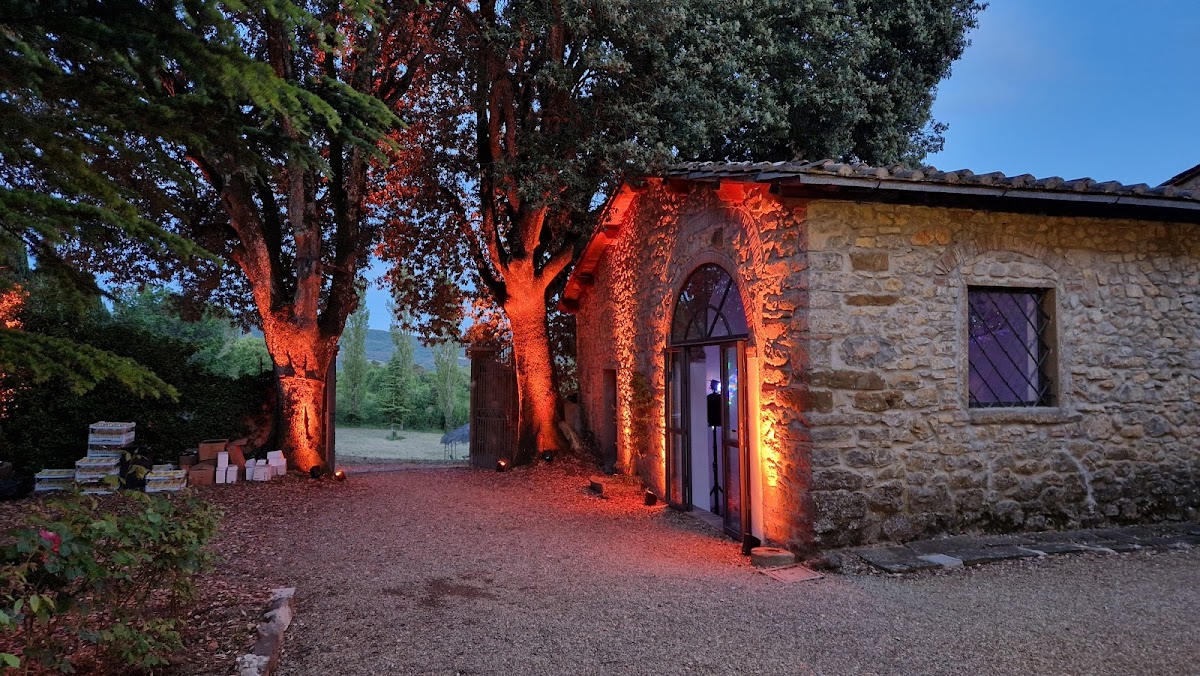
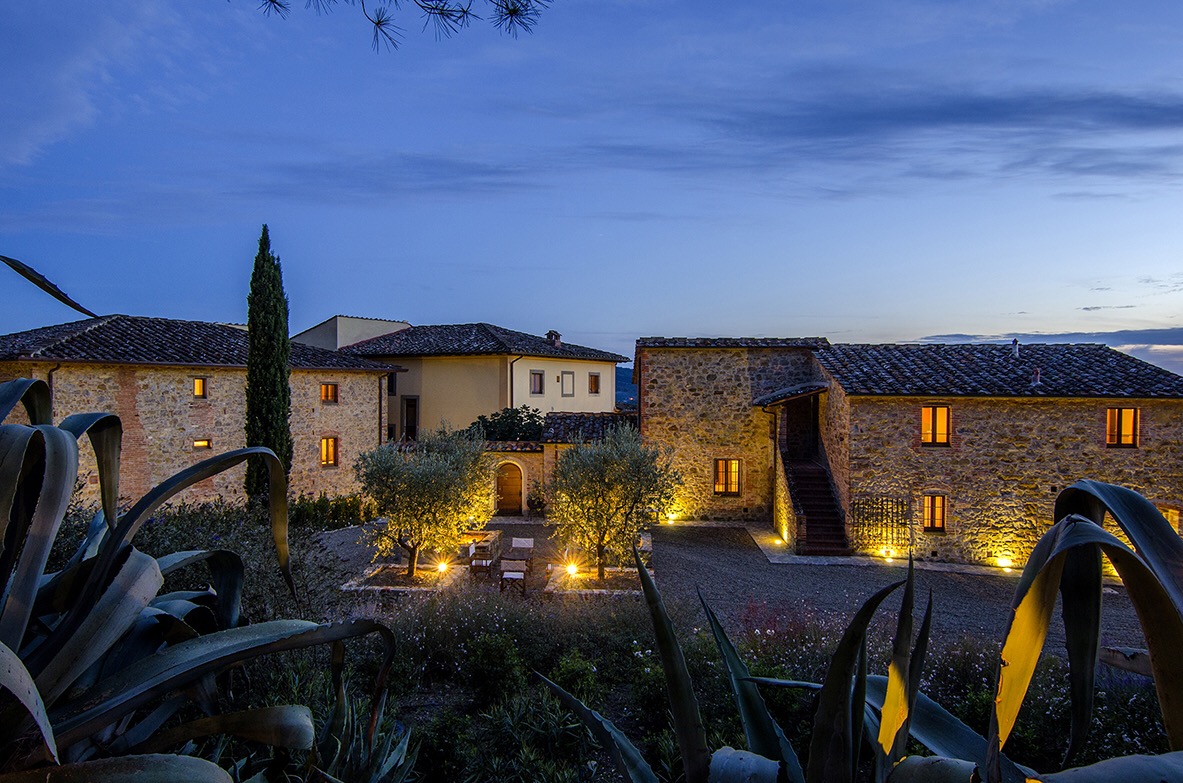
The Medieval Village is the most atmospheric option for guests who want to be immersed in the historic setting. Its accommodation is distributed through village buildings rather than along a conventional hotel corridor.
Aie del Borro provides another accommodation cluster with gardens, its own pool and breakfast at Pomario. It is a useful place to group families or friends who will enjoy spending downtime together. Casetta and Mulino suit smaller private groups, with their own pools and breakfast delivered to the villas.
I Borrigiani adds 35 places in a different style of accommodation. These are independent farmhouse stays rather than more Relais & Châteaux hotel rooms. They are separated from the central village, so the benefit is extra estate accommodation, not a promise that every guest can walk everywhere. Wedding-package breakfast, cleaning and shuttle arrangements matter here more than the ordinary self-catering description.
At 160 guests, the Relais & Châteaux inventory is fully occupied under the stated double-bedroom assumptions. At 180, the Toscana package provides enough total sleeping places, but some guests will be in I Borrigiani. At any size, single occupancy and family preferences can change how efficiently the bedrooms work.
Nearby accommodation: overflow and additional nights
Nearby hotels are most useful for approved overflow beyond estate capacity, supplier rooms, or nights before and after the wedding package. They are not a general substitute for the residential structure of the event. For guest experience and transportation, one or two coordinated overflow properties work far better than scattering people across the region.
Villa Cassia di Baccano, San Giustino Valdarno. A nearby countryside option with suites, a pool and wellness facilities. It is the first property we would investigate for a small additional group because it keeps the final transfer local. Allow approximately 5–10 minutes by car as a RoamRecs planning estimate.
Hotel Valdarno, Montevarchi. A more practical town-hotel option for a coordinated group, with straightforward road access and double, twin and family accommodation. It is a sensible candidate for a block that prioritizes logistics over another luxury estate. Allow approximately 25–35 minutes.
Viesca Toscana. A separate estate in the same hospitality family, with suites and private villas. It offers more of a countryside-stay experience, but it is not part of Il Borro’s 195-person inventory. Allow approximately 30–40 minutes for wedding transfers as a planning estimate.
Arezzo is also useful for an extended trip, with the appeal of staying in a town rather than on another estate. For the wedding itself, one or two organized pickup points are preferable to many scattered addresses. All hotel suggestions are candidates for enquiries, not evidence of availability or guaranteed room blocks.


Catering, Vendors and the Party
Two catering arrangements, not one inclusive package
Il Borro’s own hospitality operation handles the surrounding stay and hosted events subject to the estate minimum. The wedding day requires an external caterer. A caterer’s proposal should describe the full service being bought, including the aperitivo, meal, cake or dessert, wine, bar hours, staffing and equipment.
Tables, chairs, linens and glassware included by a caterer should not then be counted a second time in a rental budget. Equally, a menu price with “logistics included” does not establish that elaborate furniture, lighting, a tent or a private event area is covered.
Reference prices for welcome and farewell events
These packages include the stated wines, logistics and VAT, require at least 30 guests, and require the chosen event location to be exclusive. Location hire is separate.
- Il Borro buffet: Basic wine package, per person: €110; Premium wine package, per person: €116
- Food Therapy buffet: Basic wine package, per person: €155; Premium wine package, per person: €167
- The Village buffet: Basic wine package, per person: €165; Premium wine package, per person: €175
- Brunch: Basic wine package, per person: €155; Premium wine package, per person: €167
- Barbecue: Basic wine package, per person: €225; Premium wine package, per person: €240
- Pizza party: Basic wine package, per person: €205; Premium wine package, per person: €225
The pizza party is a full event menu with a cold buffet, shared pizzas and dessert, not simply a few pizzas ordered by the pool. The separate €75-per-person Pomario pizza tasting is limited to 40 participants and should not be substituted into a 150-person welcome-party budget. The two products solve different needs.
For a smaller hosted meal, the Bistro menus are €85 or €95 per person with specified wines, water and coffee, subject to a 30-person minimum. Osteria’s four-course tasting with wine pairing is €190 per person. These restaurant formats do not establish that the same service can be transferred to every wedding space.
Wine and bar service
Il Borro requires its own wines to be used. A different wine selection carries a €10-per-bottle corkage fee. That fee should not be interpreted as an unlimited outside-alcohol policy covering spirits, bartenders and every service arrangement.
For context, the Borro Bar aperitif with sparkling wine, estate wines and snacks is €44 per person per hour, with a 20-person minimum. The separate “Just Cocktail” option is €66 per person for one hour or €79 for two hours, also with a 20-person minimum. The latter is a two-hour package price, not €79 multiplied by two.
Planning and supplier coordination
A wedding or event planner is mandatory. The planner’s agency must manage the booking procedure, coordinate suppliers and deliver the final guest list 30 days before the wedding. Il Borro’s event coordinator handles the estate side of the logistics; that does not replace the couple’s planning team.
At this scale, production matters because the wedding moves through several parts of the estate. Catering access, power, deliveries, setup and the transition from an outdoor dinner to the late party all affect both cost and timing. A strong planner should build those logistics into the design rather than layer them on afterward.
Music: the outdoor and late-night rules
Outdoor music is permitted until 10 p.m. at up to 70 dB. Only the Relais & Châteaux and Il Borro Toscana packages may continue outdoors from 10 p.m. to midnight, at the lower limit of 60 dB. This is an extension for quieter outdoor music, not permission to keep a full-volume dance party on the terrace.
After midnight, the party can continue in the separately hired Amphitheatre or Tinaia. The useful entertainment plan still includes agreed bar and staffing hours, transport and the space reservation, rather than treating the entire estate as an unrestricted afterparty.
Ceremony Options
Garden ceremony or symbolic celebration
The formal gardens and the garden beside Villa Il Borro’s pool offer two distinct outdoor directions. The former makes more of the villa, fountain and structured planting; the latter gives the ceremony a greener setting. The seating and weather alternative should be designed around the actual guest count rather than the property’s largest reception number.
A symbolic ceremony is the simplest way to use the gardens on the couple’s preferred schedule, with the legal paperwork handled separately.
Catholic ceremony in the village
The small village church can be used for Catholic weddings, with the necessary paperwork arranged through the local priest. It is an appealing option for couples who want a religious ceremony within the estate setting, but it should be approached as a small church rather than assumed to seat the whole residential guest list.
Legally binding civil ceremony
A legally binding civil ceremony on the estate is less straightforward. Loro Ciuffenna has a process for civil ceremonies at private villas, but the current material does not establish which Il Borro location, if any, is operating under that authorization. Couples who need the legal ceremony to happen on the property should have that specific point resolved before committing to the ceremony format.

Other Practical Details Worth Knowing
Accessibility. Il Borro is not one flat, compact hotel. The village streets, terraces and separate accommodation clusters make room allocation and transport especially important for guests with mobility needs. The relevant question is the whole route through the weekend, from bedroom and breakfast to ceremony, dinner and late party.
Pool events and special effects. The pools can be part of the weekend, but swimming, glassware, late-night use and safety staffing should be treated as event-specific operating details. The same applies to candles, fireworks, confetti and drones.
Arrival and departure. A two-night format is efficient, but tight. The welcome event has to fit around guest arrival and supplier setup, while departure morning leaves little room for a substantial farewell gathering. Three nights make the weekend easier to pace, which is one reason the cost comparison matters so much.
Beauty services. The 2027 guest service prices are €120 for hair styling and €150 for makeup at the spa. Bridal and family preparations in a suite, or exclusive spa rooms for an outside professional, are separately arranged. These guest prices are not a full bridal-package quotation.
Getting There and Transportation
Il Borro is near San Giustino Valdarno, approximately 20 km from Arezzo. Its road directions use the A1 Valdarno exit and the route through the Montevarchi and Terranuova Bracciolini area toward Setteponti and San Giustino. Florence is usually the most convenient airport starting point.
- Florence Airport, FLR: Approximately 60–90 minutes
- Pisa Airport, PSA: Approximately 1 hour 45 minutes–2 hours 15 minutes
- Rome Fiumicino, FCO: Approximately 2 hours 45 minutes–3 hours 30 minutes
- Florence city center: Approximately 75–100 minutes
- Arezzo station: Approximately 25–35 minutes
- Montevarchi-Terranuova station: Approximately 25–35 minutes
These are planning allowances, not live journey times or transport quotations. Add time for baggage collection, traffic and group loading. For rail arrivals, choose between Arezzo and Montevarchi according to the train itinerary, then arrange the final transfer rather than expecting to reach the estate by train.
The included stay shuttle is useful for the estate’s dispersed accommodation. Its scope should not be extended by assumption to airport journeys, unrelated hotels or a round-the-clock service. A good transport schedule connects the accommodation clusters to the events and includes an earlier return for tired guests as well as the final late-party run.
For guests attending only the wedding weekend, a car need not be necessary when arrival transfers and estate movements are organized. Guests adding independent sightseeing may prefer one. For a larger guest list, vehicle choice matters. One full-size coach may not operate as smoothly as several smaller vehicles once turning, waiting and loading points are taken into account, so transport should be planned around the estate’s actual access rather than assumed from the guest count alone.
Best Time for an Il Borro Wedding
Our first choices would be late May, June or September. April outside Easter is the clearest lower-priced spring alternative. October can be attractive, but it remains high season and needs a more deliberate covered-event design.
- April: Average daytime high: 18.7°C; Average monthly rainfall: 73 mm
- May: Average daytime high: 23.4°C; Average monthly rainfall: 73 mm
- June: Average daytime high: 28.0°C; Average monthly rainfall: 55 mm
- July: Average daytime high: 31.4°C; Average monthly rainfall: 40 mm
- August: Average daytime high: 31.7°C; Average monthly rainfall: 46 mm
- September: Average daytime high: 25.7°C; Average monthly rainfall: 96 mm
- October: Average daytime high: 19.9°C; Average monthly rainfall: 109 mm
- November: Average daytime high: 13.9°C; Average monthly rainfall: 122 mm
July and August call for shade, water and a later ceremony. September has gentler average temperatures but is not a rain-free substitute for summer. October and November make the comfort of the covered setting more important.
For a low-season wedding, we would select the indoor or covered design because we like it, not because we hope never to use it. April’s accommodation saving is substantial, but it can be partly offset by a different production plan. The same principle applies to November, when a warm, well-protected celebration matters more than maximizing outdoor time.
Building a Wedding Weekend Around the Stay
A two-night wedding
A practical two-night rhythm is arrival and a welcome meal, the wedding on the following day, then breakfast and departure. It keeps the fixed commitment lower, but there is little space for a leisurely day after the party.
The morning before the wedding can accommodate some prebooked activities. It should not become an obligation for every guest, particularly when preparations and vendor setup are happening at the same time. A smaller number of well-chosen experiences is more useful than a packed schedule.
A three-night wedding
Three nights make room for arrival and welcome dinner, the wedding day, a relaxed post-wedding gathering and departure the next morning. That third day is where Il Borro’s residential appeal becomes easier to enjoy: guests can have breakfast without immediately packing, spend time by a pool, visit the cellar or meet for a late lunch.
The extra time has a significant price, so the farewell program should be part of the initial decision, not something added after the room package has been signed. A pizza party, barbecue and brunch also need their own compatible locations and weather alternatives rather than sharing one generic “pool party” label.
What the included activities actually provide
The included wine experience is a 45-minute visit to the Wine and Art Gallery and cellar with a welcome glass, available to wedding guests across scheduled tours. The private spa operates by reservation for one-hour appointments, with a maximum of two people per session. Two-night packages include one one-hour yoga class for up to 15 people; three-night packages include two such sessions.
Adult horse rides last one hour and take up to four people per departure, with six daily departures in high season and four in low. Children’s pony rides last 30 minutes for up to two children, with four daily departures in high season and two in low. These are limited daily slots, not a promise that a 150-person group can all ride together. A separate two-hour photo opportunity with the horses is included, but not the photographer.
The activities begin the day after arrival and must be booked by the couple through the concierge at least 15 days before arrival. Individual guests booking during the stay do not receive the package inclusion automatically. Unused activities are not refunded, and weather-cancelled horse rides are not refunded.
The sensible approach is to invite preferences in advance, allocate the limited places and leave the rest of the day open. Il Borro works best as a place guests can enjoy, not a timetable they have to complete.
Similar Tuscany Wedding Venues to Compare
Villa La Selva: a smaller wine-estate weekend
Villa La Selva is worth considering when the appeal is a country-estate stay and a wedding among gardens and vines, but Il Borro’s residential scale is more than the group needs. Its official wedding offering accommodates up to 50 guests, so it is not an equivalent all-guests-on-site option for 150. The comparison is about a smaller estate commitment, not simply choosing the less expensive-looking terrace.
Villa Cetinale: historic gardens and a more intimate guest list
Cetinale is a different proposition: a private historic garden estate with a 100-person wedding maximum and accommodation for 48 across four houses. It suits couples whose priority is the house and gardens rather than a large resort-style guest stay. It is not a substitute for Il Borro’s 160-person residential package.
Borgo Pignano, Volterra: another country-estate experience
Borgo Pignano is a useful comparison for couples attracted to an estate setting and farm-to-table entertaining. Its wedding offering emphasizes outdoor celebrations and recommends a marquee for weather protection. That makes the covered-event comparison particularly important rather than assuming another country estate has the same rain infrastructure as Il Borro. This refers to the Volterra property.
Castello di Casole: a hotel-led alternative
Castello di Casole offers a Belmond hotel setting, individually planned menus, event locations and a full-buyout option. It is worth comparing when the priority is a hotel-centered stay and a tailored hospitality proposal rather than Il Borro’s specific mix of village, villas and farmhouses. The useful comparison is the contracted bedroom inventory and event program, not an assumed like-for-like package.
Still Comparing Tuscany Wedding Venues?
Explore the RoamRecs Tuscany Wedding Venue Collection to compare private villas, wine estates, villages and hotels by accommodation, rental structure, guest capacity and covered reception options.
For Il Borro, start with the kind of weekend you want everyone to have. Its strongest case is the shared stay around the wedding. The question is whether that experience justifies the accommodation commitment, hosted spending minimum and production required to make it work well.
Save the “Ultimate Tuscany Wedding Venue Guide” collection
Add every place in this collection to your RoamRecs in one tap.
More venues near Il Borro
93 venues in Città della Pieve
Frequently asked questions
How much does an Il Borro wedding cost in 2027?
Is the €90,000 package an all-inclusive wedding price?
How many guests can stay at Il Borro?
Do all wedding guests have to stay at the estate?
What is the minimum stay?
What is the largest seated rain-plan space?
Can the wedding move inside Villa Il Borro if it rains?
Does Il Borro provide the wedding-day catering?
Does an accommodation buyout make every facility private?
What time does music have to stop?
Is October cheaper than September?
Can we have a Catholic or legally binding civil ceremony there?
Do we need a wedding planner?
Is VAT included in the listed prices?
Related guides
Best Tuscany Wedding Venues (2026): Pricing, Costs & How to Choose the Perfect Venue
Villa La Selva Wedding Guide (2027): Pricing, Capacity & Everything to Know
Villa Cetinale Wedding Cost (2026): Pricing, Capacity & Everything to Know
Borgo Pignano Wedding Cost 2027: Pricing, Capacity & Complete Guide
Castello di Casole Wedding Guide (2027): Pricing, Capacity & Everything to Know
Castello di Bossi Wedding Cost (2026): Pricing, Accommodation & Everything to Know
About the creator
RoamRecs Weddings researches destination wedding venues around the world, comparing current pricing, guest capacity, accommodation, rain plans and booking requirements to help couples understand what venues actually cost and how they work.
View profile →