Lupaia Wedding Guide (2027): Pricing, Capacity & Everything to Know
A practical guide to getting married at Lupaia, including its 2027 exclusive-use cost, 36-guest event limit, on-site accommodation, rain plan, food-and-beverage commitment and destination-wedding logistics.
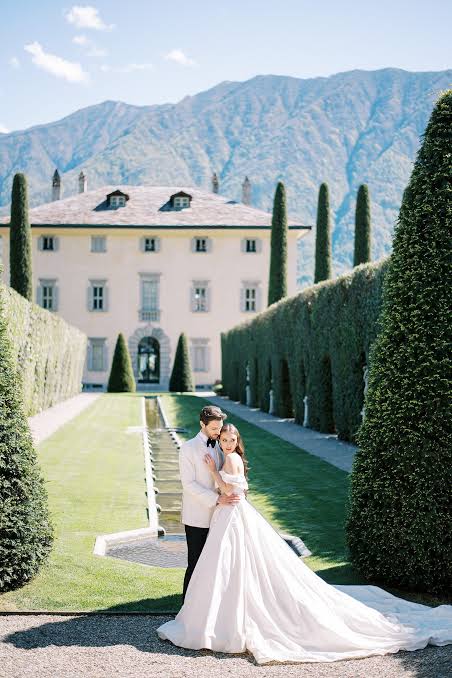

Lupaia is a very different proposition from the large Tuscan villas that dominate wedding shortlists. It is a 12-room boutique hotel made from restored farm buildings on a private hill outside Montepulciano, with a restaurant, bar, wine room, infinity pool and a small enough footprint that a wedding can feel like taking over a country house rather than renting an event complex. Weddings are only accepted on an exclusive-use basis, and the hotel requires a minimum stay of three consecutive nights.
For 2027, the exclusive-use rate is €23,000 per night for 24 guests in double occupancy, making the required three-night rental €69,000. Lupaia also requires at least €5,000 of food and beverage spend per day, and the minimum is not cumulative. If three daily minimums apply to the three-night stay, the combined property-and-hospitality floor is €84,000 before the required planner, flowers, music, photography, production and other external wedding services.
Capacity is equally important to understand. Symbolic ceremonies and food-and-beverage functions can be arranged indoors or outdoors for a maximum of 36 guests. Overnight, Lupaia currently lists full-property buyouts for up to 32 guests, while the headline 2027 rate includes 24 in double occupancy. In practice, 36 is the event ceiling, 32 is the current lodging figure and 24 is the occupancy included in the base rate.
Lupaia at a Glance
- Location: Località Lupaia 74, Torrita di Siena, between Montepulciano and Pienza in southern Tuscany
- Venue type: 12-room boutique hotel in five restored farmhouse buildings; whole-property buyout required for weddings
- 2027 exclusive-use rate: €23,000 per night for 24 guests in double occupancy
- Minimum stay: Three consecutive nights for weddings
- Three-night rental: €69,000
- Mandatory F&B minimum: €5,000 per day, not cumulative. Three daily minimums equal €15,000; the contract should define exactly which stay days are chargeable.
- Three-night planning floor: €84,000 if the stay carries three daily F&B minimums, before external wedding services and pricing for overnight guests above 24
- Wedding capacity: Maximum 36 guests for symbolic ceremonies and food-and-beverage functions, indoors or outdoors
- On-site accommodation: Base rate includes 24 guests; Lupaia currently lists full-property buyouts for up to 32 guests
- Planner: Required
- Food and drink: Lupaia operates its own restaurant and bar; the wedding terms require a daily F&B spend
- Exclusive use: Mandatory for a wedding and for any group above six guests
- Music / curfew: No hard cutoff is stated in the wedding terms; amplified-music location, sound limits and finish time belong in the event agreement
- Closest airport: Perugia Airport, about 60 minutes by car; Florence Airport is about 90 minutes and usually the more practical international gateway
- Best fit: Approximately 24-32 guests for a three-night private-hotel wedding weekend
- Main consideration: A high fixed-cost floor for a venue capped at 36, plus unpriced overnight occupancy above the 24 guests included in the base rate
- Illustrative wedding budget: Approximately €120,000-€170,000 for 32 guests and three nights, before pricing for overnight guests above the 24 included in the base rate and the exclusions explained below
The RoamRecs Take
Lupaia works best when the hotel stay is the wedding, not when the hotel is simply the backdrop for one evening. With only 12 rooms, a restaurant at the center of the property and a 36-person function limit, the natural version is a small group arriving together, eating together for several days and moving between the pool, gardens, restaurant and stone buildings without a large production operation taking over the estate.
The sweet spot is roughly 24 to 32 guests. Twenty-four fits the 2027 base price exactly. Thirty-two matches Lupaia’s current full-buyout guest figure and can keep the whole group inside the hotel if the room and extra-bed plan works for your party. A 36-person wedding is possible at the event level, but it reaches the venue’s maximum and sits four people above the current lodging figure. That gap matters if keeping every guest on property is central to the weekend.
The strongest logistical advantage is the rain plan. Lupaia allows both symbolic ceremonies and food-and-beverage functions indoors or outdoors for up to 36 guests. For a small Tuscany wedding, that is meaningful. Many villas have a larger outdoor maximum than their useful indoor dinner room; at Lupaia, the stated event ceiling is the same in both settings. The remaining question is how the indoor ceremony, drinks, dinner and dancing sequence works in practice.
The biggest drawback is cost concentration. If the three-night stay carries three daily F&B minimums, the property-and-hospitality planning floor is €84,000 before most wedding vendors enter the budget. That fixed floor barely changes if you invite 24 instead of 32 people, so Lupaia is expensive on a per-person basis. It makes sense for couples who value three days of private-hotel hospitality enough to spend heavily on a small group. It is much harder to justify if your priority is simply finding a beautiful ceremony and dinner setting.
There is also an access detail that matters more than it sounds. The final approach is an approximately 3 km gravel track through vineyards and woodland. It is part of the sense of arrival, but it favors pre-arranged cars and minibuses over assuming a full-size coach can reach the hotel comfortably.
Bottom line: We would look elsewhere if your guest list may move above 36, if you want a one-day wedding, if you do not want to use a professional planner, or if you want a venue where the accommodation and event budget falls sharply when the guest list gets smaller. For a 24-32 person destination wedding where food, service, privacy and a real hotel stay matter as much as the reception itself, Lupaia has a much clearer identity.
How Much Does a Lupaia Wedding Cost?
The 2027 exclusive-use rate
The 2027 wedding rate is €23,000 per night for 24 guests in double occupancy, with a minimum booking of three consecutive nights. Breakfast, minibar, parking, services and taxes are stated as included in that price.
- Three nights: Rental calculation: €23,000 × 3; rental total: €69,000
- Four nights: Rental calculation: €23,000 × 4; rental total: €92,000
- Five nights: Rental calculation: €23,000 × 5; rental total: €115,000
Only the three-night minimum is a required wedding term. The four- and five-night figures are simple arithmetic using the same 2027 nightly rate, not separate packages. Later-year or date-specific proposals can differ.
The €5,000 daily F&B minimum
Lupaia also requires a minimum food-and-beverage spend of €5,000 per day, and specifically states that the minimum is not cumulative. Three daily minimums equal €15,000, but the wedding terms do not define whether arrival and departure calendar days create any additional minimum.
Why “not cumulative” matters
If one day generates €3,500 of eligible F&B spend and the next generates €6,500, the second day’s overspend should not be assumed to cover the first day’s €1,500 shortfall. Build each day around its own €5,000 floor unless the contract says otherwise.
That structure encourages couples to use the hotel properly across the whole stay. A welcome dinner, wedding-day meal and departure brunch or lunch make more sense here than paying for the third night and moving guests off property for most meals.
Three-night planning floor
- Exclusive-use hotel rental: €69,000
- Three daily F&B minimums: €15,000
- Property-and-hospitality planning floor: €84,000
For comparison purposes, €84,000 is a useful three-night planning floor if the stay carries three €5,000 F&B minimums. It is not an all-in wedding price. It does not assign a value to overnight occupancy above the 24 guests included in the base rate, and it does not include the required planner or the external services the planner is expected to coordinate.
What is included?
- Exclusive use of the hotel for the booked nights.
- Accommodation for 24 guests in double occupancy within the base 2027 rate.
- Breakfast.
- In-room minibar.
- Parking.
- Services and taxes as stated in the wedding rate.
- Use of the hotel’s hospitality infrastructure, including the restaurant, bar, library, lounge, wine room, infinity pool, heated Jacuzzi and gym, subject to the event plan and operating rules.
The distinction between hotel services and wedding production is important. Lupaia has a substantial hospitality team and an in-house restaurant, but the wedding terms still require a planner to handle external services such as the ceremony, decoration, music, flowers and hair styling.
What sits outside the headline rate?
- Occupancy above the 24 guests included in the base rate.
- Any F&B spend above the €5,000 daily minimum.
- The mandatory wedding planner.
- Ceremony production and celebrant services.
- Flowers, styling and decorative installations.
- Music, entertainment, sound and any licensing.
- Photography and videography.
- Additional rentals, lighting and technical production where required.
- Guest transfers and wedding-day shuttles.
- Any off-property accommodation needed if the wedding reaches 36 or if the on-site room plan does not fit your party.
Estimated Wedding Budget
RoamRecs planning estimate, not a venue or vendor quote.
The following ranges assume a three-night 2027 buyout, three €5,000 daily F&B minimums, one wedding day, a welcome gathering and a simpler departure meal, professional destination-wedding suppliers and no large temporary structure. The F&B floor is included inside the food-and-beverage line rather than added twice.
- 24: Illustrative planning range: €115,000-€160,000
- 32: Illustrative planning range: €120,000-€170,000
- 36: Illustrative planning range: €125,000-€180,000
These ranges exclude pricing for overnight guests above the 24 included in the base rate, off-property rooms, flights, attire, rings, honeymoon costs, a marquee or other major weather structure, and any tax added to supplier quotes that are provided before tax. They are planning ranges rather than guaranteed ceilings.
What the 32-person model contains
- Three-night 2027 exclusive-use rental: €69,000
- Food and beverage across the stay: €15,000-€25,000
- Wedding planning and coordination: €8,000-€15,000
- Photography and videography: €7,000-€12,000
- Flowers and design: €5,000-€12,000
- Rentals, lighting, sound and production: €4,000-€10,000
- Music, entertainment and licensing allowance: €3,000-€7,000
- Local guest transport: €1,500-€4,000
- Ceremony, beauty and stationery allowance: €3,000-€6,000
- Contingency: 10% of non-rental costs: €4,650-€9,100
- Calculated model total: €120,150-€169,100
The low end is not a stripped-back elopement budget. It assumes Lupaia’s restaurant, bar and existing hospitality spaces reduce the amount of outside catering infrastructure and rentals needed compared with a blank-slate villa. The high end allows for stronger design, photo/video coverage and entertainment without moving into a major-production wedding.
The fixed cost is the defining feature. Using three daily F&B minimums, the €84,000 property-and-hospitality planning floor barely changes whether the wedding has 24 guests or 32. Cutting eight guests saves some food, transport and styling cost, but it does not materially change the rental. Lupaia makes financial sense when the private hotel experience is a central part of what you are buying, not simply because the guest list is small.
Capacity and Event Spaces
Lupaia’s wedding maximum is 36 guests. The same ceiling applies to symbolic ceremonies and food-and-beverage functions, whether they are indoors or outdoors. The important distinction is that 36 is a venue-wide function limit, not a promise that every room has a 36-person seated layout. Exact layouts for the ceremony, dinner and dancing are not specified in the wedding terms.
- Panoramic garden / lawn: Best use: Symbolic ceremony, portraits;
- Restaurant and dining areas: Best use: Wedding dinner, wet-weather dining;
- Pool area: Best use: Welcome cocktails or daytime gathering;
- Ancient stone oven area: Best use: Pizza party or casual welcome event;
- Wine room: Best use: Wine tasting or intimate meal;
- Bar, library and lounge: Best use: Smaller gathering / guest downtime;
The property’s scale should shape the design. A 30-person dinner can feel intentional in a hotel this small; a production that tries to imitate a 150-person villa wedding can overwhelm the same spaces. The best setups are likely to use the existing restaurant, terraces, gardens and bar as they are, then spend selectively on florals, lighting and music rather than importing large amounts of infrastructure.

What Is the Rain Plan at Lupaia?
Lupaia’s rain plan starts from a useful fact: symbolic ceremonies and food-and-beverage functions can be arranged indoors or outdoors for up to the full 36-person wedding maximum. In other words, the stated capacity does not shrink simply because the weather turns.
That gives Lupaia a credible foundation for a full-capacity rain plan. What remains unresolved is the sequence: the wedding terms do not name the indoor ceremony room, show a seated dinner plan or explain whether cocktails, dinner and dancing can happen without resetting the same space.
A complete wet-weather version should account for four moments: ceremony seating, drinks while dinner is prepared, the meal itself and the move into music and dancing. If the same room changes uses, the turnover time and where guests wait during the reset matter to how the evening will feel.
There is no reason to assume a marquee is required simply to cover the guest count, which is a real advantage. The wedding terms do not establish whether temporary structures are permitted, so a tent should be treated as an optional design question rather than the default rain solution.
For 24-32 guests, this is a strong rain-plan foundation. At 36, the venue-wide limit still works on paper, but the exact seated and dancing layouts matter more. The key question is not whether Lupaia has an indoor option, but whether you genuinely like the indoor version of the wedding enough to use it.

Accommodation and Where Guests Should Stay
Understanding the three accommodation numbers
Lupaia has 12 rooms and suites spread across five restored farmhouse buildings. Farmers settled the hilltop in 1622, and the property still feels like a small collection of houses rather than a conventional hotel corridor.
How we would allocate the rooms
For a 24-person wedding, the cleanest plan is one double-occupancy allocation per room and suite, with the two-bedroom Master Suite used according to the actual bed plan. For 28-32 guests, the rooming chart becomes more important because extra beds are available only in suites. We would allocate the couple, parents and anyone with mobility or child-care needs first, since the five-building layout means rooms differ in access and proximity to the restaurant and event areas.
For planning purposes, 32 is the lodging figure to use unless Lupaia provides a different rooming plan for the wedding dates. The 36-person number belongs to event capacity, not sleeping capacity.
Overflow accommodation
At the full 36-person wedding maximum, the current published difference is only four people, so you may need just two nearby rooms rather than a large hotel block. Keeping those guests close to Montepulciano or on the same side of the valley makes the most sense.
Borgo San Vincenzo is a useful larger fallback if you want a second boutique property for family or pre- and post-wedding nights. It has 21 rooms and suites and can accommodate 44 people at double occupancy, with a whole-property exclusive-use option.
Precise Tale Poggio Alla Sala is the scale option. The hotel has 60 rooms and suites, a spa, dining and an events team near Montepulciano. It is far more inventory than a 36-person Lupaia wedding requires, but useful if guests are extending the trip, if families want resort facilities, or if part of the group does not want to stay on a very small property.
For the actual wedding weekend, availability and the shuttle route matter more than headline room count. If overflow rooms are needed, keeping them in one nearby property will make the small guest list much easier to move.

Catering, Vendors and the Party
Food and beverage is part of the venue model
Lupaia is not a dry-hire villa. It has its own restaurant, open kitchen, wine and cocktail bar and all-day guest dining, and the wedding terms require at least €5,000 of food-and-beverage spend every day of the buyout. Current dining information emphasizes seasonal Tuscan cooking, local produce and a wine list centered on southern Tuscany.
What counts toward the daily minimum is not itemized in the wedding terms. The important quote detail is whether meals, wine, cocktails, late-night food, vendor meals, service and any cake or corkage charges all count toward the same €5,000 daily threshold. Because the minimum is not cumulative, how spending is allocated across the stay matters as much as the total.
The wedding terms center food and beverage on Lupaia’s own hospitality and do not describe a separate outside-catering option. We would therefore build the menu around Lupaia unless a specific outside chef or caterer is important to the wedding concept.
A planner is mandatory
Lupaia requires a wedding planner. The planner is expected to handle the external services needed for the celebration, including the ceremony, decorations, music, flowers and hair styling. The venue can provide planner contacts it has worked with previously, but the current terms do not say that couples must choose from a closed planner list.
That division of labor is sensible for a property this small. The hotel can focus on rooms, meals and guest service, while the planner manages the suppliers arriving up the gravel road, the weather decision, ceremony setup and event timeline.
Music and late-night rules
Exclusive use removes the conflict with ordinary hotel guests, but it does not amount to an unlimited music policy.
For planning, treat the approved dancing location, indoor and outdoor sound rules and final amplified-music time as one contract point. We would design the party around the hotel’s existing spaces rather than assume a nightclub-style setup can operate anywhere on the property. The applicable Italian music license is a separate responsibility.
Production and access
Lupaia’s small scale reduces the amount of production a wedding should need, but access still matters. Supplier arrival times, vehicle size on the gravel approach, available power, poolside safety and any use of candles, fireworks or generators can affect the design and cost. These details are best handled through the planner and event agreement rather than treated as separate reasons to rule the venue in or out.

Ceremony Options and Legal Requirements
Symbolic ceremony or blessing
Yes. Lupaia explicitly hosts wedding blessings, and its wedding terms allow symbolic ceremonies for up to 36 guests indoors or outdoors. The gardens and views toward Montepulciano are the obvious outdoor draw, while the contract should identify the exact indoor location used if the weather turns.
Legally binding civil ceremony
Lupaia hosts symbolic ceremonies and blessings rather than an on-site legally binding civil ceremony. An on-property blessing should therefore be treated separately from the legal marriage.
Lupaia sits in the Comune di Torrita di Siena. The municipality publishes official ceremony locations including Palazzo Pretorio and Parco del Tondo, the Sala del Consiglio and Teatro Comunale degli Oscuri. Montepulciano also publishes a separate list of municipal civil-wedding venues in its historic center and around the lake.
For an international couple, the legal-document process depends on nationality and residency. If having the legal ceremony on the same day matters, ask the planner to confirm the current civil-status paperwork, interpreter requirements where relevant, registrar availability and the exact municipal location before finalizing the wedding timeline.

Getting There and Transportation
Lupaia is close to Montepulciano geographically but deliberately secluded in practice. The hotel’s current directions route guests to the end of the paved road and then along an approximately 3 km unpaved gravel track through vineyards and woodland. The hotel specifically warns that the final stretch may not suit very low-clearance vehicles.
- Perugia Airport (PEG): About 60 minutes by car
- Florence Airport (FLR): About 90 minutes by car
- Pisa Airport (PSA): About 2.5 hours by car
- Rome Fiumicino (FCO): About 2.5 hours by car
- Siena: About 50 minutes by car
- Arezzo: About 45 minutes by car
- Chiusi-Chianciano Terme rail hub: Useful rail arrival point for southern Tuscany; arrange the final private transfer rather than relying on a spontaneous taxi
Perugia is the closest airport, but Florence is usually the easier international recommendation because it has a broader flight network and still keeps the road transfer manageable. Long-haul guests may use Rome and accept the longer final drive. Lupaia can arrange private transfers from elsewhere in Italy.
Rail travelers can reach the wider area through Chiusi-Chianciano Terme, which has current regional connections toward Montepulciano, Torrita di Siena and Siena. The last leg to Lupaia still needs a car. For most destination weddings, we would treat the train as a way to get into the region, not as door-to-door transportation.
Wedding-day shuttles and vehicle access
At a maximum of 36 guests, transportation is easier than at a 150-person estate, but the last road still matters. We would use pre-arranged cars or minibuses, with the venue confirming the maximum vehicle dimensions, turning point, waiting area and supplier loading plan. A full-size coach should not be booked simply because the guest count could fit inside one.
Guests who stay at Lupaia for the full three nights do not need a car if arrivals and excursions are organized. Guests who want to explore Pienza, Montepulciano, Montalcino and the wider countryside will appreciate a rental car, but the wedding itself should not depend on everyone driving after dinner.

Best Time for a Lupaia Wedding
Lupaia is open from mid-March to early December and closed in winter. The hotel’s pool is not heated, while the adjacent Jacuzzi is heated; the pool bar operates from May through September. That makes the main wedding season a practical question of heat, rain and how much of the weekend you want to spend outside.
- April: Average daytime high: 18.1°C; Average rainfall: 71 mm
- May: Average daytime high: 22.7°C; Average rainfall: 70 mm
- June: Average daytime high: 27.1°C; Average rainfall: 52 mm
- July: Average daytime high: 30.5°C; Average rainfall: 29 mm
- August: Average daytime high: 30.7°C; Average rainfall: 39 mm
- September: Average daytime high: 25.0°C; Average rainfall: 81 mm
- October: Average daytime high: 19.8°C; Average rainfall: 106 mm
Our first choices would be late May, June and early September. Late May has comfortable temperatures and a green landscape, June gives you long evenings with lower average rainfall than spring, and early September keeps the warmth without July and August’s average 30°C-plus daytime highs.
July and August work if the ceremony is scheduled later and guests have shade, water and time around the pool, but they are the months most likely to feel hot in formal clothes. September is not a dry-season guarantee: regional rainfall rises to 81 mm on average. By October it climbs to 106 mm, so the indoor version of the wedding needs to be part of the design rather than a backup you dislike.
April is the interesting quieter option. Average highs are around 18°C and regional rainfall is higher than in early summer, but Lupaia’s stated 36-person indoor function capacity makes an April wedding more plausible here than at a venue whose indoor dinner room is much smaller than its outdoor guest limit.

Building a Wedding Weekend Around the Stay
The three-night minimum is short enough to feel like a wedding weekend rather than a full holiday, but the daily F&B minimum means it is worth using all three days. One natural structure would be arrival and a poolside or stone-oven welcome gathering, the wedding the following day, then a slower lunch, wine tasting or pool afternoon before departure the next morning.
The hotel already offers private wine tastings, cooking classes, truffle hunting, e-bike tours, yoga and other experiences. For a group this small, one shared activity can add more to the weekend than a second heavily produced event. We would resist filling every hour. Lupaia’s value is partly that guests can use the hotel like a hotel.
The F&B minimum should influence the schedule. A three-night stay spans arrival and departure dates, while the wedding terms describe a daily minimum without defining the chargeable days. That distinction matters most if the arrival or departure day is intentionally light on food and drinks.

Similar Wedding Venues to Compare
Terre di Nano: similar overnight scale, more agriturismo character
Terre di Nano is the most useful nearby comparison if having roughly the whole guest list sleep together is the priority. Its current official accommodation inventory totals 36 beds across the main villa and independent houses, and it hosts weddings with its own restaurant and event operation. The feel is more family-run country estate and agriturismo than small luxury hotel.
Its appeal is a similar small-group house-party scale with more country-estate character, while Lupaia is more hotel-led and service-centered.
Borgo San Vincenzo: more rooms without moving to a large resort
Borgo San Vincenzo offers 21 rooms and suites and accommodates 44 people at double occupancy, with an exclusive-use model. It is worth comparing if Lupaia’s 12-room inventory is the constraint but you still want a boutique property near Montepulciano rather than a large resort.
Precise Tale Poggio Alla Sala: much more hotel infrastructure
Precise Tale Poggio Alla Sala has 60 rooms and suites, a spa, multiple dining options and an events team. It solves the room-block problem comprehensively, but it is a different wedding experience: a larger resort rather than a 12-room private hilltop hotel.
Borgo Santo Pietro: a five-star hotel option for a bigger guest list
Borgo Santo Pietro’s current wedding material supports celebrations up to 100 guests and combines the wedding with a much broader five-star hospitality operation near Siena. It is the comparison to make if you like the idea of a hotel-led Tuscany wedding but know the guest list will outgrow Lupaia’s 36-person ceiling.
Still Comparing Tuscany Wedding Venues?
Explore the RoamRecs Tuscany Wedding Venue Collection to compare villas, boutique hotels, wine estates and resorts by rental structure, wedding capacity, on-site accommodation, minimum stay and indoor rain plan.
For Lupaia, the most useful question is not whether another property has a prettier view. It is whether you want to spend the weekend as a private group inside a 12-room hotel, and whether that experience is worth a planning floor of €84,000 before most wedding vendors are added, assuming three daily F&B minimums apply.
Save the “Ultimate Tuscany Wedding Venue Guide” collection
Add every place in this collection to your RoamRecs in one tap.
More venues near Lupaia
131 venues in Città della Pieve
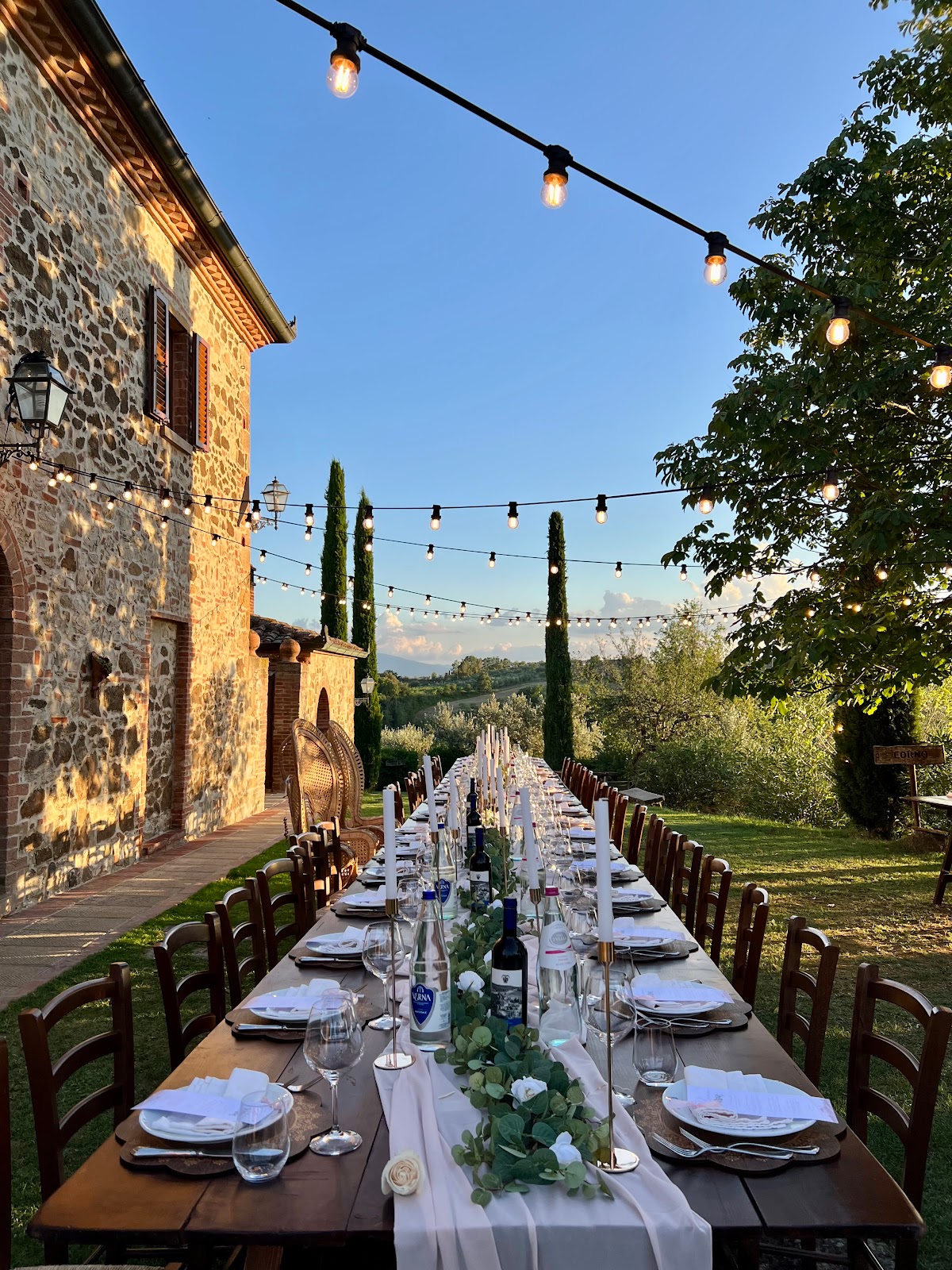
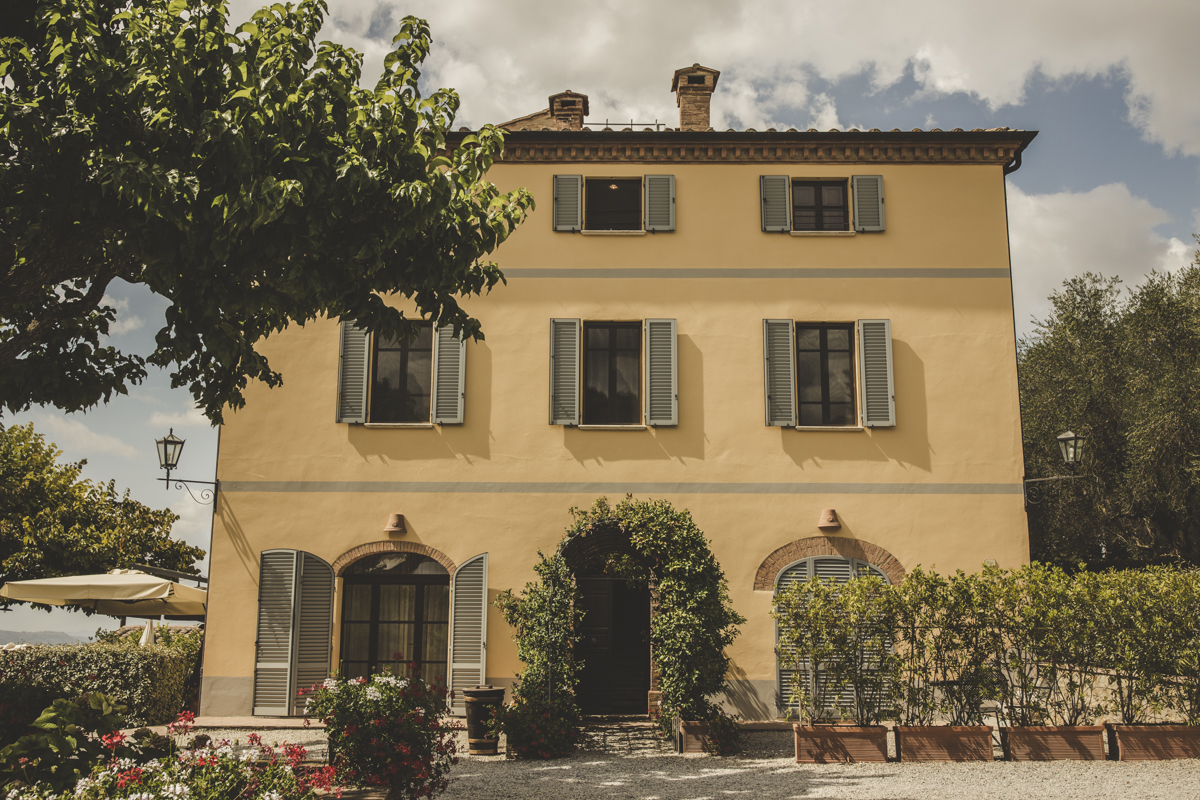
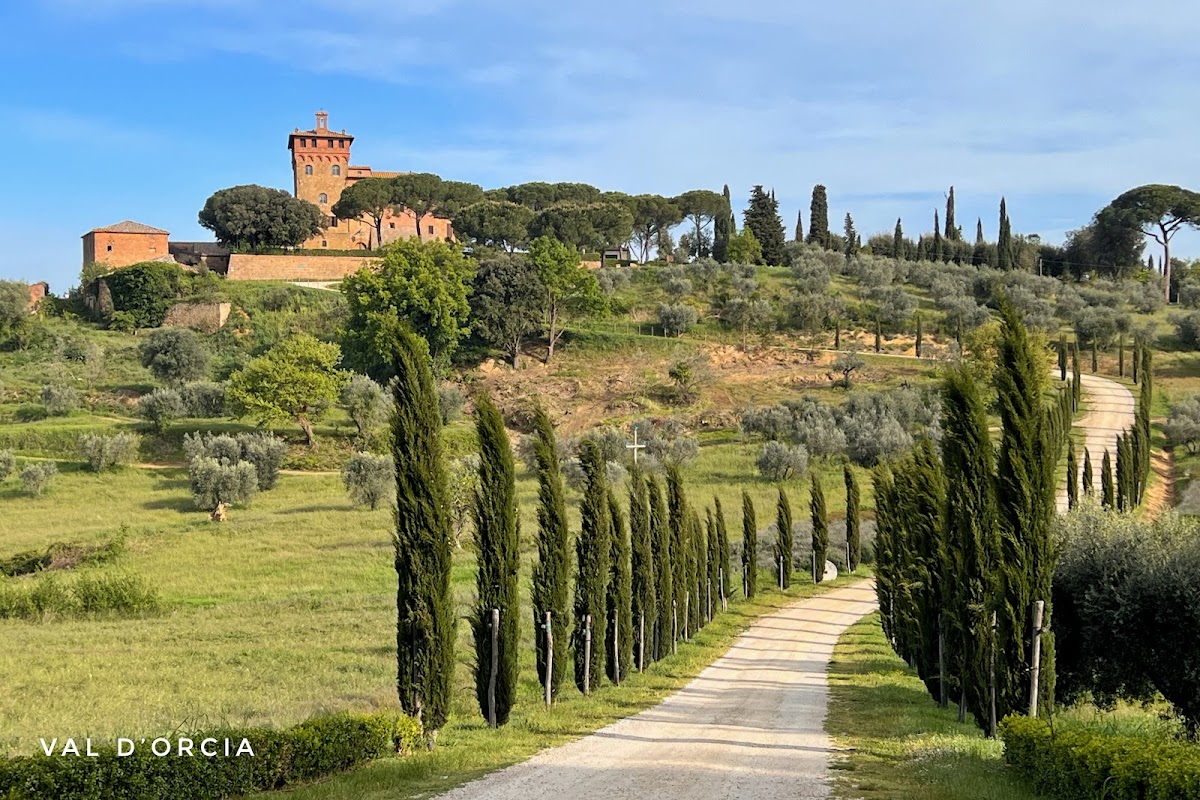
Palazzo Massaini
53026 Pienza, Province of Siena, Italy
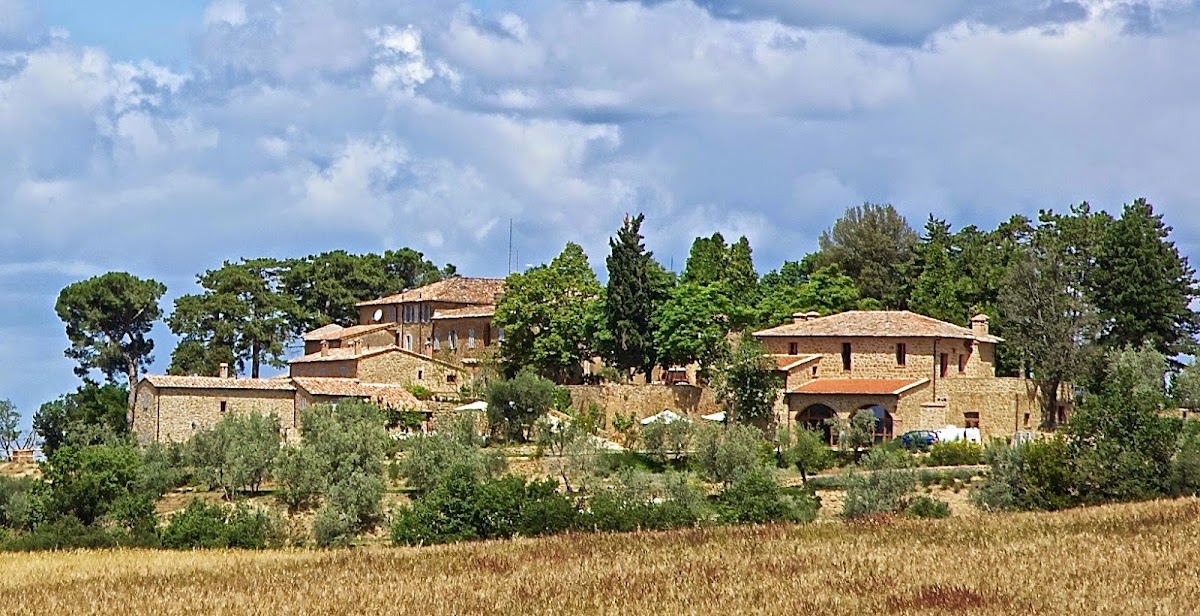
Frequently asked questions
How much does a Lupaia wedding cost?
How many wedding guests can Lupaia accommodate?
How many guests can stay at Lupaia?
Is there a minimum stay?
What is the rain plan?
Is a wedding planner required?
Does Lupaia provide catering?
Can you have a legally binding ceremony at Lupaia?
What time does music have to end?
What airport should guests use?
What is the best time of year for a Lupaia wedding?
Related guides
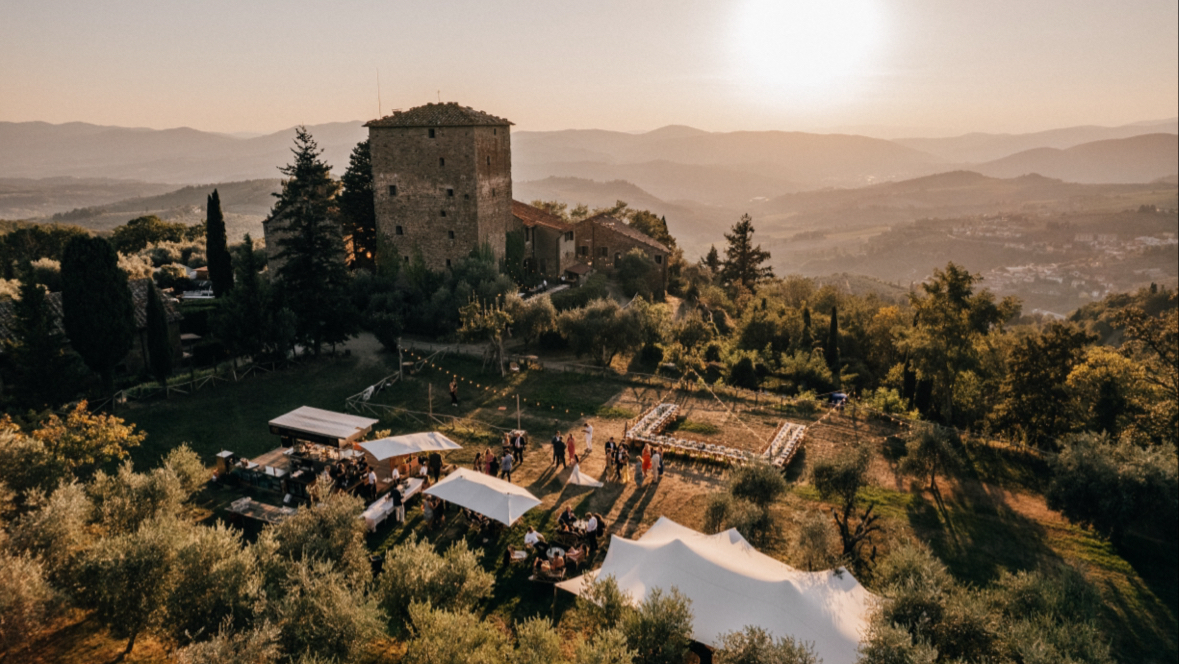
Best Tuscany Wedding Venues (2026): Pricing, Costs & How to Choose the Perfect Venue
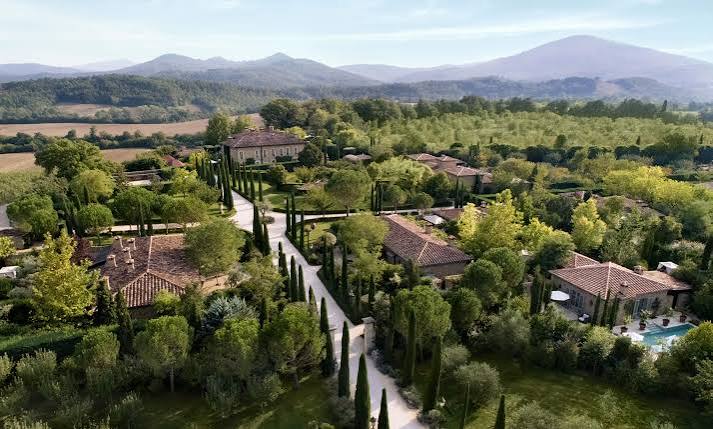
Borgo Santo Pietro Wedding Guide (2026): Pricing, Capacity & Everything to Know
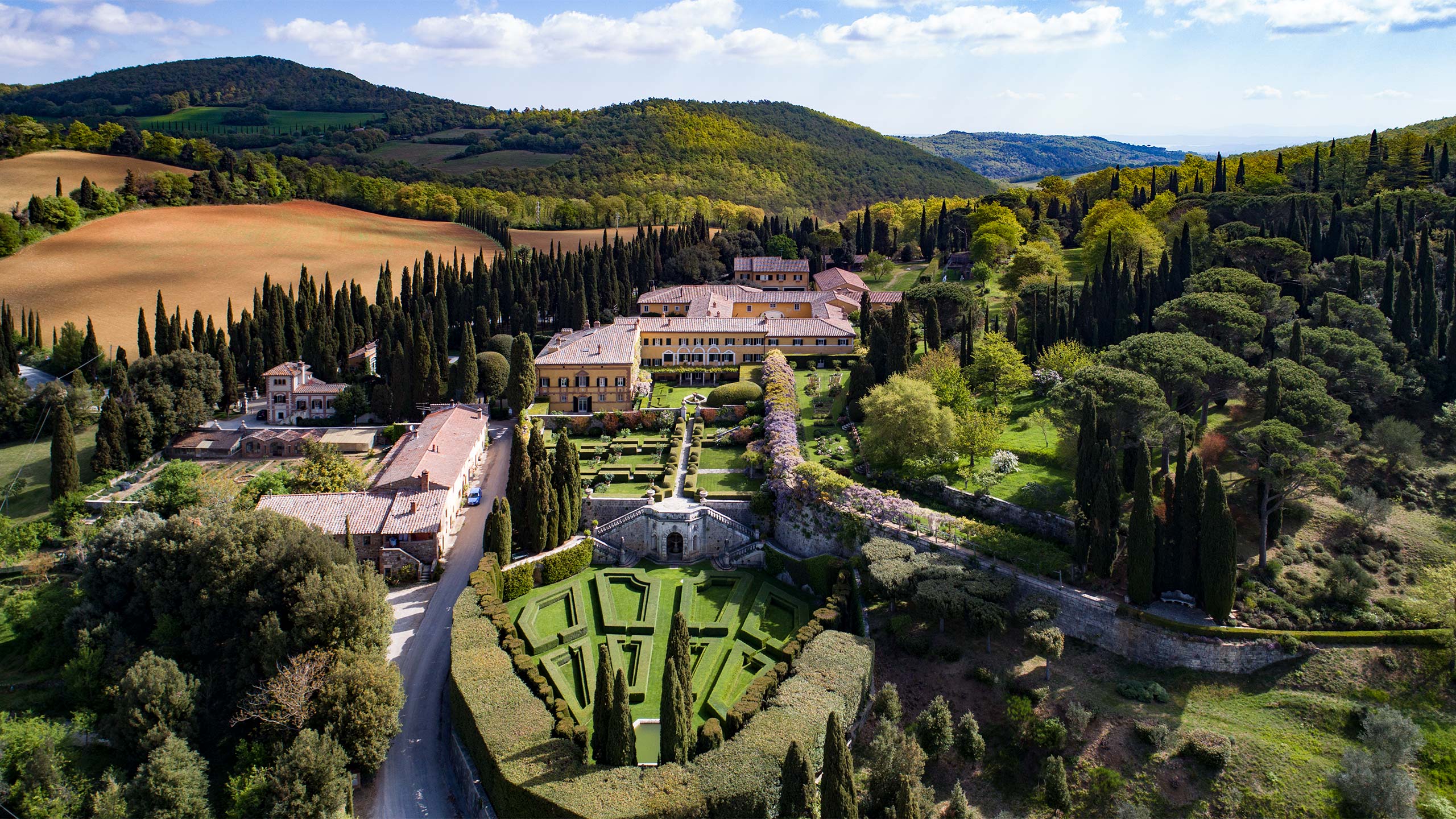
La Foce Wedding Guide (2027): Pricing, Capacity & Everything to Know
Castiglion del Bosco Wedding Guide (2027): Pricing & Capacity
Castello di Vicarello Wedding Guide (2027): Cost, Capacity & Everything to Know
Castello di Velona Wedding Guide (2027): Pricing, Capacity & Everything Else
About the creator
RoamRecs Weddings researches destination wedding venues around the world, comparing current pricing, guest capacity, accommodation, rain plans and booking requirements to help couples understand what venues actually cost and how they work.
View profile →