Domaine de Manville Wedding Guide (2028): Pricing, Capacity & Everything Else
A two-night Provence wedding with hotel service, rooms and villas for up to 120, and an important choice between an intimate glass-roofed dinner and a larger tented celebration.
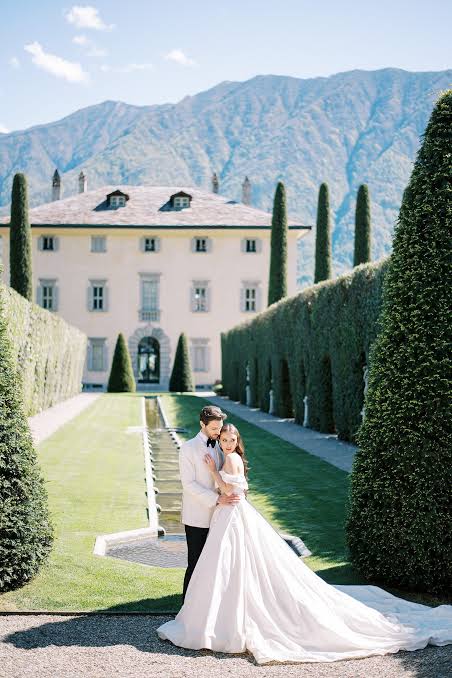

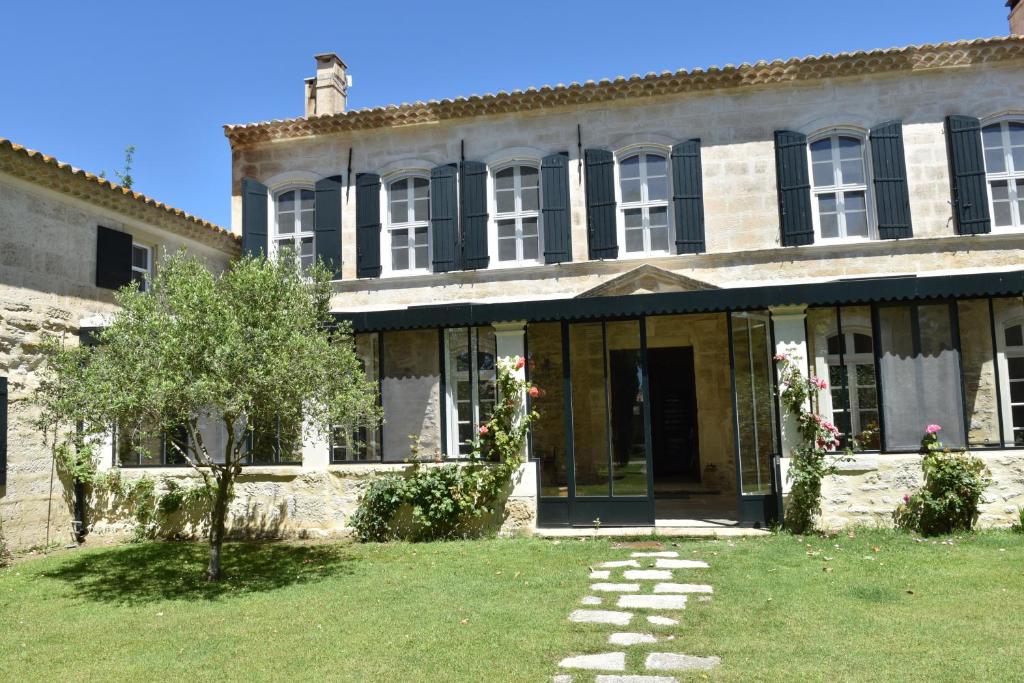
Domaine de Manville is for couples who want their wedding to feel like taking over a country hotel, rather than hiring a beautiful location for a single evening. At the foot of Les Baux-de-Provence, its stone buildings, jasmine courtyard and olive trees give the weekend a distinctly Provençal setting. The 30 hotel rooms and nine villas make it possible to keep a substantial wedding group together, with the restaurant, bar and spa woven into the stay.
The essential numbers are two nights, up to 120 overnight guests and 80 seated indoors in the Winter Garden. Above 80, the reception needs a tent. Catering can extend to 150 guests, but the larger guest list outgrows both the on-site accommodation and the tent option offered for groups up to 120. The covered layout becomes a central part of choosing the venue, not just a detail for later.
Buyout starting rates are €20,000, €40,000 or €60,000 per night in low, mid or high season respectively, before food, drinks and wedding production. For a 100-person, two-night celebration using the €40,000 mid-season starting rate, our planning model comes to approximately €235,000–€320,000, including accommodation, the weekend meals and drinks, suppliers and a tent allowance.
Domaine de Manville at a Glance
The buyout brings the hotel stay and wedding together, with meals and production priced separately.
- Location: Les Baux-de-Provence, in the Alpilles, Provence, France
- Venue style: Five-star country hotel with a courtyard, olive grove, Winter Garden, spa and villas
- Buyout starting rates: Low €20,000/night; mid €40,000/night; high €60,000/night
- Minimum venue commitment: Two nights: from €40,000, €80,000 or €120,000 respectively; food and drinks extra
- Exclusive-use window: From 4 p.m. on arrival day until noon on departure day
- Accommodation: Up to 120 guests; 30 hotel rooms/suites plus 28 bedrooms within nine villas
- Indoor seated dinner: Maximum 80 in the Winter Garden
- Larger celebrations: Tent required above 80; an option is offered for groups up to 120, with seated layout to be agreed. Catering ceiling: 150
- Wedding calendar: No weddings between mid-June and mid-September. Spring, early June and late September are the principal windows to explore
- Food and planning: In-house catering only; breakfasts and two meals on the estate required; professional wedding planner required
- Exclusivity exceptions: Golf course and bistro remain outside the buyout and accessible to other visitors
- Music and party finish: No fixed finish time established; music locations and late-party hours need agreement
- Airport and rail transfers: Marseille Provence: about 50–70 minutes; Avignon TGV: about 35–45 minutes.
- RoamRecs preferred format: Around 70–80 for an indoor-dinner option; 90–120 for a tented weekend with most or all guests staying together
- Illustrative 100-person budget: RoamRecs planning estimate: approximately €235,000–€320,000, using a two-night €80,000 mid-season buyout; assumptions and exclusions below
- Main consideration: A substantial accommodation commitment, with tent costs becoming central above 80 guests
The RoamRecs Take
Manville’s strongest feature is the part of a destination wedding that often gets overlooked: everything that happens between the formal events.
Guests can meet over breakfast, spend a morning by the pool, retreat to their rooms before the ceremony and see each other again the next day without a series of coach journeys. The villas suit families and groups of friends who like a shared living room; the hotel rooms suit guests who prefer their own space. That mix is a meaningful advantage over an estate with a handful of beautiful suites and a large reception lawn.
It is also a good fit for couples who care about food but do not want to build an entire catering operation from scratch. The kitchen and bar are part of the venue, while you can choose the other wedding suppliers. The courtyard and olive grove provide two different atmospheres without needing to turn the property into something it is not.
The tradeoff is that this is an expensive hotel takeover, not a modest venue hire with optional accommodation. At the mid-season starting rate, the two-night buyout alone is €80,000. A smaller guest list reduces meals and some production, but the same fixed accommodation commitment remains.
The other dividing line is 80 guests. Around 70–80, the Winter Garden can be the dinner setting you choose, rather than a room you reluctantly move into when it rains. At 90–120, we would approach Manville as a tented wedding from the outset, with its appearance, location and cost central to the design.
Our preference would be a spring or late-September weekend, a guest list that fits the room arrangements, and enough budget to make the covered celebration as appealing as the outdoor one. The more of the weekend guests spend together, the more Manville’s hotel-and-villa format earns its place in the budget.
Look elsewhere for a July or August wedding, outside specialist catering, or a budget that leaves no room for the required planner and weather protection. At 150 guests, Manville loses some of its all-together advantage and needs a larger covered plan. It is also not a completely closed estate: the independently accessed golf course and bistro continue operating.
Our view: choose Manville for the combination of its Provençal setting and the shared hotel stay. Its advantage is not the largest possible reception. It is how well a carefully sized wedding can live together for the weekend.
Domaine de Manville Wedding Photos


How Much Does a Domaine de Manville Wedding Cost?
The two-night buyout
- Low season: Starting nightly buyout: €20,000. Two-night starting total: €40,000.
- Mid-season: Starting nightly buyout: €40,000. Two-night starting total: €80,000.
- High season: Starting nightly buyout: €60,000. Two-night starting total: €120,000.
These are starting prices for the buyout, not complete wedding packages. Your quote needs to price the actual dates and include any mandatory charges and taxes. The high-season rate does not open up July or August: weddings pause between mid-June and mid-September.
What the buyout gives you
The accommodation comprises the 30 hotel rooms and suites and all nine villas. Private use includes the bar, spa and gourmet restaurant. The golf course and bistro are exceptions, with independent access for other visitors.
Food and drink remain separate charges. Breakfast and two meals on the estate are compulsory. Our budget treats the welcome and wedding dinners as the two required meals, with farewell brunch added as an optional gathering. That meal-count assumption, including whether any further meals are required during the stay, needs to be settled in the catering quote.
Wedding golfers are offered access to the 18-hole course, and a massage benefit is included for the couple and their parents. The course remains shared with other golfers; tee times and the number and duration of massage appointments need arranging around the weekend.
What sits outside the rental
Allow separately for catering, drinks, breakfast, the wedding cake, the required planner, flowers, décor, furniture and tabletop rentals, music, lighting, photography, videography, transport and weather protection. The planner coordinates the outside production suppliers, including tent and table-and-chair rental.
Longer service hours, early setup, late departure and additional events may add to the venue bill. These charges, along with any additional VAT and tourist tax, sit outside the estimates below until priced for the wedding.
Food and Drink: The Full Price Structure
A €150 wedding menu covers the dinner food, not the full reception. Canapés, aperitif drinks, dinner drinks and the party bar are separate, while breakfast and the other weekend meals add substantially to the total. The rates below are starting prices, apart from the €30 breakfast tariff.
- Welcome aperitif open bar: Price per person: From €50. How it is charged: Separate from the welcome buffet.
- Welcome buffet with show cooking: Price per person: From €110. How it is charged: Food.
- Welcome dinner drinks: Price per person: From €20. How it is charged: Beverage package.
- Welcome party open bar: Price per person: From €25/hour. How it is charged: Per person, per hour.
- Breakfast buffet: Price per person: €30. How it is charged: Mandatory; model budgets each breakfast separately.
- Pool-party snacking buffet: Price per person: From €50. How it is charged: Optional food; à la carte is another option.
- Pool-party drinks: Price per person: From €30. How it is charged: Optional beverage package.
- Wedding canapés: Price per person: From €15. How it is charged: Aperitif food.
- Wedding aperitif open bar: Price per person: From €70. How it is charged: Separate from dinner drinks.
- Four-course wedding menu: Price per person: From €150. How it is charged: Food; cake extra.
- Five-course wedding menu: Price per person: From €190. How it is charged: Alternative to the four-course menu.
- Wedding dinner drinks: Price per person: From €50. How it is charged: Beverage package.
- Wedding party open bar: Price per person: From €25/hour. How it is charged: Per person, per hour.
- Wedding cake: Price per person: Additional charge. How it is charged: Separately selected and priced.
- Farewell brunch buffet: Price per person: From €110. How it is charged: Optional additional meal.
- Brunch drinks: Price per person: From €30. How it is charged: Separate beverage package.
Aperitif packages and the hourly party bar cover different parts of the evening. The aperitif duration still needs agreement; neither package should be assumed to run all night. The menu quote also needs to account for children, supplier meals, minimum billed numbers, beverage choices and guests who do not drink.
What a wedding reception adds up to
- Canapés + wedding aperitif bar + four courses + dinner drinks: Per person: €285. For 100 people: €28,500.
- The same, with three hours of party open bar: Per person: €360. For 100 people: €36,000.
- Five courses instead, with the same three-hour party bar: Per person: €400. For 100 people: €40,000.
These examples combine the starting prices rather than represent fixed packages. Cake and any additional charges are separate. The three-hour bar is a planning assumption; the party’s finishing time is agreed separately.
One extra hour of party bar adds €2,500 for 100 billed guests or €3,000 for 120. Moving from four to five courses adds €40 per person: €4,000 at 100 guests or €4,800 at 120. Those are useful decisions to make before spending time on smaller decorative savings.
Food and drink across a two-night stay
For the budget models, we use a welcome aperitif, buffet and dinner drinks (€180), two breakfasts (€60), a four-course wedding reception with three hours of party bar (€360), and farewell brunch with drinks (€140). That totals €740 per person.
- 80 people: Modeled food and drink: €59,200. With the €80,000 mid-season buyout: €139,200.
- 100 people: Modeled food and drink: €74,000. With the €80,000 mid-season buyout: €154,000.
- 120 people: Modeled food and drink: €88,800. With the €80,000 mid-season buyout: €168,800.
This assumes the same adult-priced headcount at each meal and both breakfasts charged in addition to brunch. Brunch does not automatically replace the mandatory departure breakfast. If the venue agrees to replace one breakfast, the direct reduction would be €30 per person. A wedding with different resident and event headcounts should price each gathering separately.
The optional pool-party buffet and drinks would add €80 per person, or €8,000 for 100. The model does not include that pool catering or a late bar after the welcome dinner.
Estimated Wedding Budget
RoamRecs planning estimate, not a venue or vendor quote.
These models use the €80,000 two-night mid-season starting buyout and the €740-per-person food-and-drink program above.
Each scenario assumes all wedding guests also stay on site for both nights and attend the welcome event, both breakfasts, wedding reception and farewell brunch. Accommodation is included in full, without deducting contributions from guests. The room-sharing arrangements still need to work for that group.
- 80 guests: RoamRecs planning range: Approximately €205,000–€275,000. Weather-production assumption: Indoor dinner in the Winter Garden, plus €8,000–€18,000 for additional weather protection and related setup.
- 100 guests: RoamRecs planning range: Approximately €235,000–€320,000. Weather-production assumption: €18,000–€35,000 for a tent and its associated weather infrastructure.
- 120 guests: RoamRecs planning range: Approximately €260,000–€355,000. Weather-production assumption: €22,000–€45,000 for a larger tent and associated weather infrastructure.
The 80-person scenario uses the Winter Garden for dinner and allows for extra cover elsewhere, not a full-size dinner tent. A dinner tent would increase that budget. At 100 and 120 guests, the allowance needs to be matched to a tent design that fits the tables, service areas and entertainment.
Inside the 100-person model
- Two-night mid-season buyout: €80,000
- Welcome event, two breakfasts, wedding food and drinks, farewell brunch: €74,000
- Wedding planning and coordination: €10,000–€18,000
- Photography and videography: €8,000–€14,000
- Flowers and décor: €10,000–€22,000
- Furniture, tabletop, event lighting and sound production: €10,000–€22,000
- Tent, flooring, weather enclosure and related infrastructure: €18,000–€35,000
- Music and entertainment: €6,000–€14,000
- Local guest transport: €3,000–€6,000
- Ceremony, beauty and stationery: €4,000–€8,000
- Wedding cake: €1,000–€2,000
- Contingency: 10% of all modeled costs except the buyout: €14,400–€21,500
- Calculated model total: €238,400–€316,500
The ranges exclude any additional VAT or tourist tax, date-specific increases over the starting prices, extra venue charges, off-site guest accommodation, airport transfers, flights, personal attire and rings. They also exclude extra nights, pool-party catering, meals and drinks beyond the stated program, childcare and unusual technical requirements. Any refundable damage security is a separate cash requirement, not a wedding expense. The contingency provides breathing room, but it is not a fixed-price guarantee.
What changes the budget most?
The rental season, guest count, tent specification and drinks schedule are the biggest early decisions. Changing only the two-night buyout from the €80,000 mid-season starting total to the €40,000 low-season starting total reduces the 100-person model by €40,000, to €198,400–€276,500. Substituting the €120,000 high-season starting total increases it to €278,400–€356,500. These are comparisons, not offers for specific dates or promises of identical production costs in different weather.
Within this meal-count assumption, removing the optional farewell brunch reduces the direct 100-person food-and-drink bill by €14,000, while retaining the welcome and wedding dinners and both breakfasts. A 100-person pool lunch with its drinks package adds €8,000 before other changes.
Guest contributions toward accommodation can reduce what the couple personally funds, but they do not lower the gross wedding cost. Agree how guests will be charged, who collects payments and who carries any shortfall before treating contributions as available money.
Capacity and Event Spaces
Indoor dinner, overnight stays and the larger wedding
The Winter Garden seats 80 for dinner, the estate sleeps up to 120, and catering can serve up to 150. For weddings above 80, the tent option is offered for groups up to 120, but its seated layout with service areas and entertainment still needs agreement.
- Winter Garden: Best use: Indoor seated dinner beneath the glass roof. Capacity and practical meaning: Maximum 80 seated for dinner. Ceremony, standing drinks and dinner with dancing need separate layouts.
- Olive grove: Best use: Symbolic ceremony and photographs. Capacity and practical meaning: Outdoor ceremony setting; the seated guest limit still needs to be established.
- Jasmine courtyard: Best use: Ceremony, aperitif, breakfast and outdoor celebration. Capacity and practical meaning: A central part of the hotel setting, with fountain and planted pergolas; dinner seating depends on the selected arrangement.
- Outdoor tent location: Best use: Larger reception and bad-weather protection. Capacity and practical meaning: Required above 80. An option is offered for groups up to 120; location and seated layout remain to be agreed.
- Pool setting: Best use: Relaxed daytime gathering. Capacity and practical meaning: Pool parties are an option; event size, swimming capacity and supervision need a separate arrangement.
- Gourmet restaurant and bar: Best use: Food, drinks and hospitality during the buyout. Capacity and practical meaning: Included in private use; not an established additional banquet capacity alongside the Winter Garden.
The grove and courtyard give the wedding two distinct outdoor settings. The covered plan is more constrained: the Winter Garden’s 80 seats and the tent’s proposed group size do not automatically leave room for every bar, band and dance-floor arrangement.
How the guest count changes the experience
At 70–80 guests, the strongest starting point is a ceremony outdoors, drinks in the courtyard and dinner in the Winter Garden or outside with the indoor dinner arranged as the fallback. The glass roof makes the indoor dinner a distinctive setting in its own right.
At 90–120, use the courtyard and olive grove to give the day variety, but plan the reception around the tent. A clear division between ceremony, drinks and dinner can work well, provided the covered version of that sequence also works.
At 121–150, the wedding needs a larger covered arrangement than the option currently offered for groups up to 120. A 150-person wedding also leaves at least 30 guests needing other accommodation, even when all 120 on-site places are used. That changes both the rooming plan and the easy, all-together rhythm that makes Manville attractive.
What Is the Rain Plan at Domaine de Manville?
The Winter Garden is the principal indoor dinner option, with a maximum of 80 seated guests. For larger weddings, a tent is required. For a smaller wedding, the indoor dinner solves only one part of a wet day: the ceremony, drinks, guest movement and dancing still need somewhere to go.
A good Manville rain plan should preserve the feeling of the weekend rather than simply keep dinner dry. At 80 or fewer, the question is whether the ceremony and aperitif can happen under cover while the dinner room is already set, or whether a room changeover is needed. Guests should have somewhere comfortable during that transition.
At 81–120, the tent is part of the reception, not a last-minute rental. Its cost needs to cover a usable space, including flooring, sidewalls, lighting, power, any heating or cooling, delivery and installation. An open-sided canopy offers a very different level of protection from an enclosed tent. Guests also need a comfortable route between dinner, the hotel and the toilets; keeping the tables dry is not enough.
Wind deserves the same attention as rain. The mistral can arrive with sunshine, and its gusts can make a ceremony or tented event uncomfortable even when the forecast looks bright. The plan needs somewhere for guests to go if conditions exceed the tent’s safe operating limits, with the venue and supplier responsible for deciding when that move is necessary.
The two-night exclusive-use window runs from 4 p.m. on arrival day to noon on departure day. Tent installation, deliveries and dismantling may require access outside that window. Early access or later collection may cost extra, particularly when other hotel guests arrive immediately before or after the wedding.
Our recommendation: choose the covered version of the wedding as carefully as the outdoor one. Beyond 120 guests, the larger weather plan needs to be in place before the guest list grows.
Accommodation and Where Guests Should Stay
Sharing the stay between hotel rooms and villas
Manville can accommodate up to 120 wedding guests across 30 hotel rooms and suites and nine villas. The villas contain 28 bedrooms, making 58 rooms and bedrooms in total, rather than 58 separate hotel units. A villa is a shared house with several bedrooms and living spaces.
This is one of the property’s advantages when the guest list includes families or close friends who enjoy sharing a house. Deluxe villas have three bedrooms, and the four-bedroom Deluxe Villa adds another configuration. Prestige villas have three en-suite bedrooms, a kitchen and living-and-dining space. The room allocation should reflect those differences rather than simply dividing the guest count by two.
The four-bedroom Deluxe Villa includes a ground-floor bedroom and bathroom designed for guests with reduced mobility. That is a useful starting point for room selection, but the routes from the room to the courtyard, ceremony and reception still need to suit the individual guest.
For 100 guests, keeping everyone on site is possible within the 120-person ceiling, provided the mix of couples, single guests, children and villa sharing works. At 120, every place is in use, leaving no spare allowance for suppliers or additional family members. The bedroom list, rather than the headline capacity alone, determines whether the whole group can stay together.
Nearby accommodation
- Val Baussenc, Maussane-les-Alpilles: Why it is worth considering: 25 rooms in a Provençal hotel with a pool, restaurant and some accessible rooms; a practical starting point for a concentrated guest block. Driving allowance to Manville: About 5–10 minutes.
- Du Côté des Olivades, Paradou: Why it is worth considering: A 10-room boutique hotel with terraces or balconies and an olive-garden setting; better for a smaller group than the entire overflow list. Driving allowance to Manville: About 5–10 minutes.
- Baumanière, Les Baux-de-Provence: Why it is worth considering: A luxury alternative with 53 rooms distributed between several buildings; useful for guests wanting a separate high-end stay. Driving allowance to Manville: About 10–15 minutes.
For most off-site guests, Maussane, Paradou and Les Baux are the most convenient search areas. Saint-Rémy-de-Provence and Arles can broaden the choice, but they introduce longer journeys for each event. Concentrating the group in one or two pickup points is usually more pleasant than running a shuttle to a long list of scattered rentals.
Catering, Suppliers and the Party
The food is part of the reason to choose Manville
The wedding menus are prepared by the estate’s kitchen under Lieven Van Aken, the chef associated with L’Aupiho, its Michelin-starred restaurant. The style draws on Provence and the estate’s produce. Choose Manville because that culinary approach appeals to you, not because you hope to replace it with an outside caterer later. Outside catering is not accepted.
The menu discussion should cover dietary needs and the style of service, as well as the food itself. A particular religious or specialist catering requirement is a reason to establish suitability early; the outside-caterer restriction is a genuine limitation, not a minor supplier preference.
The venue’s bar team handles the drinks offering. The prices distinguish aperitif, dinner beverages and the hourly party bar. Outside alcohol, corkage and any special champagne arrangements belong in the beverage agreement, rather than being assumed from the freedom to choose other vendors.
A planner is required
Manville requires a professional wedding planner. The planner coordinates the outside suppliers and the production elements the hotel does not handle, including flowers, furniture, tenting, lighting and entertainment. Other than catering, you can choose your vendors, subject to the practical requirements of working on the property.
This division can work well: the hotel focuses on accommodation and hospitality, while the planner runs the overall wedding. Design, outside-supplier coordination and event rentals remain part of the separate wedding budget.
Music and the late-night party
The full-buyout offering has no venue-imposed sound restriction, but that does not override local noise rules or settle where amplified music may operate. Departmental rules restrict outdoor loudspeakers at the hospitality and entertainment premises they cover, including courtyards and gardens. The permitted spaces, any authorizations and the agreed finishing time therefore need to be settled with the venue for your celebration.
For a late party, the important answers are where everyone can dance, how many fit and when music and service finish. Extra bar hours are a separate charge, not permission to keep outdoor music running.
Ceremony Options
Symbolic ceremony on the estate
The olive grove and jasmine courtyard are the two established ceremony settings. The grove offers a softer landscape backdrop; the courtyard makes the architecture and planting part of the ceremony. For either setting, the practical choices are seating, shade and a comfortable approach for guests.
For an international destination wedding, completing the legal marriage at home and holding a symbolic ceremony at Manville is often the simplest arrangement. It keeps the estate ceremony focused on the people and setting without relying on eligibility for a French civil marriage.
A legally binding wedding in France
A hotel booking does not establish the right to a French civil marriage. The normal routes depend on a qualifying connection to the commune through a couple’s domicile or residence, or a parent’s domicile or residence. The residence route generally requires at least one month of continuous residence by the publication of the banns. Eligibility and documents should be checked with the mairie for the couple’s circumstances.
Do not assume that the private estate can host the legal civil ceremony. A religious ceremony is also a separate arrangement with the relevant religious authority; it is not secured by booking the hotel. Where an off-site ceremony is planned, leave enough time for guest transport and the return to the estate.
Getting There and Transportation
Marseille Provence Airport is the most straightforward airport to investigate for an international group, while Avignon TGV is a useful rail arrival point. Manville can arrange transfers. For the wedding itinerary, allow room for traffic and group travel rather than scheduling around the quickest possible drive.
- Marseille Provence Airport, MRS: Road-transfer allowance: About 50–70 minutes
- Avignon TGV station: Road-transfer allowance: About 35–45 minutes
- Nîmes airport, FNI: Road-transfer allowance: About 45–60 minutes
- Montpellier Méditerranée Airport, MPL: Road-transfer allowance: About 70–90 minutes
- Maussane-les-Alpilles or Paradou: Road-transfer allowance: About 5–10 minutes, depending on the accommodation
We would organize arrival transfers around a few flight or train clusters rather than try to collect every guest individually. Off-site guests should have a shuttle for the wedding night, with an earlier return option for families and another at the agreed finish. Confirm the loading point and suitable vehicle size with the hotel and transport operator before booking a full-size coach.
The on-site accommodation is valuable precisely because it removes many of those journeys. It does not eliminate transfers for guests who arrive before the buyout begins, stay elsewhere or extend their trip afterward.
Best Time for a Domaine de Manville Wedding
Start with May, early June before the wedding closure, or late September. April is also a real option for a couple happy to build around cooler evenings and a covered plan. Manville does not organize weddings between mid-June and mid-September, so July and August should not be the starting point for this shortlist.
- April: Average daytime high: 19.3°C. Average monthly rainfall: 56.4 mm.
- May: Average daytime high: 23.4°C. Average monthly rainfall: 44.0 mm.
- June: Average daytime high: 27.8°C. Average monthly rainfall: 30.6 mm.
- September: Average daytime high: 25.7°C. Average monthly rainfall: 78.9 mm.
- October: Average daytime high: 20.9°C. Average monthly rainfall: 85.6 mm.
These are regional monthly averages, not a forecast for the estate, and the June and September figures describe whole months rather than only the available wedding windows. They illustrate why late September can be attractive without being reliably dry.
May is our first choice for mild weather and a spring setting. Early June offers more warmth before the summer wedding pause. Late September can still suit an outdoor-focused celebration, provided the covered version is equally appealing. October needs both an available wedding date and a stronger cool-weather plan.
The mistral can be dry and sunny as well as windy, so weather planning should not depend on rain probability alone. Secure décor, sheltered guest waiting areas and a properly specified tent matter in spring and autumn alike.
Building the Wedding Weekend
Arrival day: settle in, then welcome everyone
With private access starting at 4 p.m., an evening welcome party is a better fit than a lunch promised to the entire guest list. Allow time for check-in, room allocation and a pause after travel. A buffet with show cooking suits the first gathering: guests can mingle without immediately sitting through another formal dinner. The aperitif and dinner beverage packages are separate choices.
Wedding day: keep the morning light
Breakfast, a swim or a pre-booked spa appointment gives guests something to enjoy without sending them away from the estate. A catered pool party is optional. A quieter morning may suit the group just as well, but guests still need a plan for lunch because meals are not included in the buyout.
We would start with a ceremony in the grove, drinks in the courtyard and dinner in the Winter Garden or tent. The sequence keeps the day varied without sending guests off the property, with the final layout shaped by the guest count, weather plan and permitted party space.
Departure day: a farewell that fits the checkout
Brunch is a lovely way to see everyone again, but noon marks the end of private access. Plan the meal early enough for guests to eat, collect luggage and leave comfortably, or arrange extra time. The billing treatment of breakfast and brunch should be agreed rather than assumed to merge.
For a genuinely leisurely Sunday afternoon, a third night or an agreed extension may be worth the extra cost. Either needs its own price.
The Three Decisions That Matter Most
First, choose the right scale. A 75-person dinner with an indoor option and a 110-person tented reception are different weddings, even though both can make excellent use of the same hotel.
Second, work from the complete weekend cost. The buyout, compulsory food commitments, bar hours, planner and weather production belong in the first budget, not in a list of extras discovered after choosing a date.
Third, decide how private and how late the celebration needs to be. Public access to the bistro and golf course may be entirely unobtrusive for your plans, but a particular ceremony location or late outdoor party deserves a more specific conversation.
Similar Venues to Compare
Baumanière: another food-led hotel stay in Les Baux
Baumanière is the closest conceptual comparison for couples drawn to hospitality, restaurants and the Alpilles rather than a château façade. It has 53 rooms across several buildings and offers tailored private events. The useful comparison is how many guests stay together, which areas are private and where the reception takes place. Its wedding arrangements are not necessarily the same as Manville’s two-night buyout.
Château de Tourreau: the private-house alternative
Tourreau, near Orange and Avignon, puts the château, gardens, infinity pool and smaller resident group at the center of the experience. It is worth comparing when architectural drama and a close family stay matter more than keeping nearly the whole wedding in hotel accommodation. The accommodation scale is much smaller than Manville’s, so the guest-stay and transport plans solve different problems.
Château d’Estoublon: a grander château setting with a smaller overnight core
Estoublon offers a château among vineyards and olive trees, with ten rooms and suites in its private-stay offering. It is the comparison for couples who want the château itself to be the main visual feature and are comfortable finding other accommodation for much of the guest list. Manville’s advantage is the larger shared hospitality weekend; Estoublon’s is a more concentrated private-house experience.
Still Comparing Provence Wedding Venues?
Explore the RoamRecs Provence wedding venue guides to compare hotels, private estates and châteaux by total weekend cost, on-site accommodation and the quality of the covered celebration.
For Manville, the most useful question is not simply whether the grounds can welcome your guest list. It is whether the right combination of bedrooms, dinner setting and weather protection gives that group the weekend you actually want.
Save the “Ultimate France Wedding Venues Guide” collection
Add every place in this collection to your RoamRecs in one tap.
More venues near Domaine de Manville
155 venues in Grignan
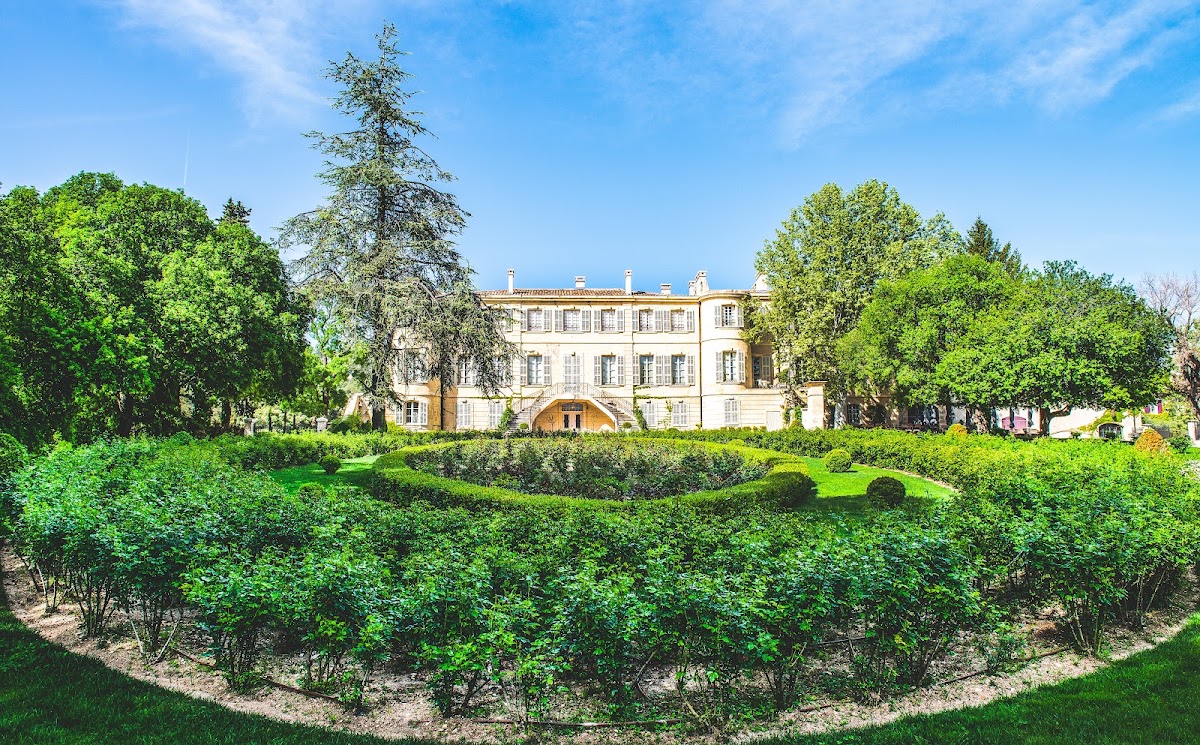
Château d'Estoublon
Château d'Estoublon, 13990 Fontvieille, France
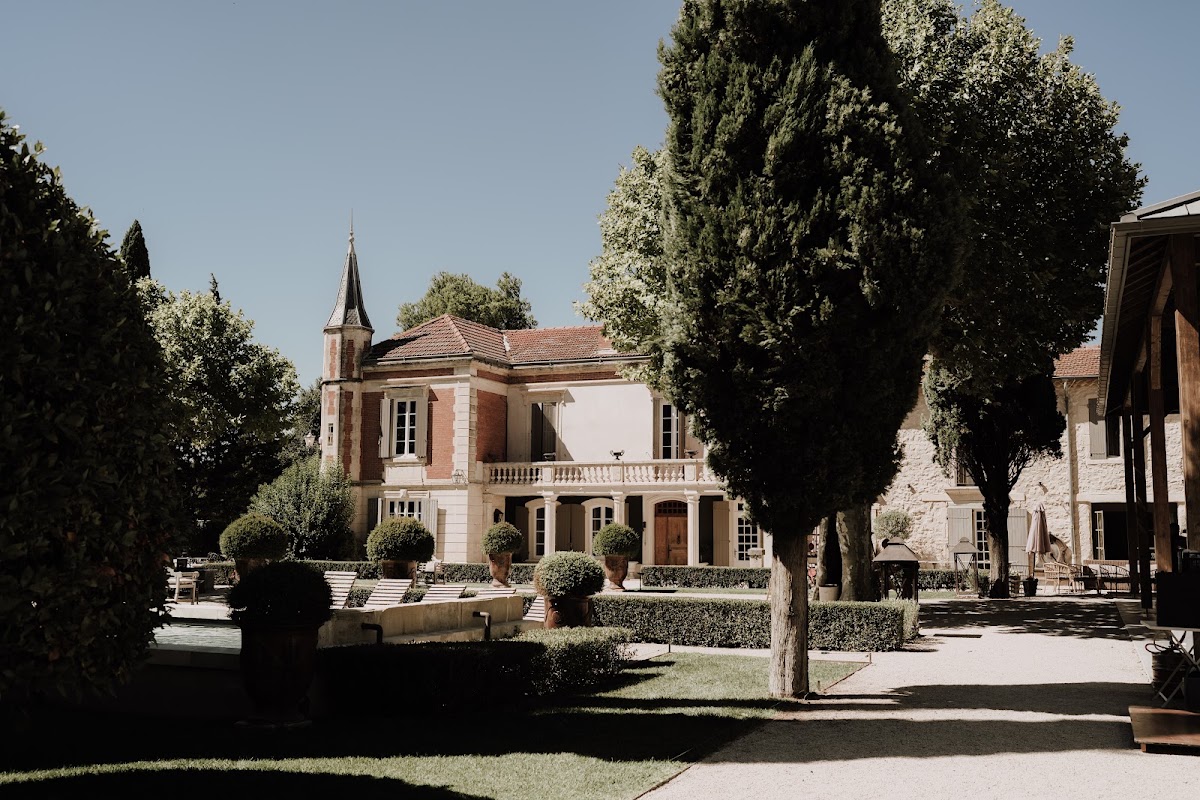
Mas d'Arvieux - Lieu de réceptions, mariages et Séminaires
2 Chemin du Mas d'Arvieux, 13150 Tarascon, France
Frequently asked questions
How much does a Domaine de Manville wedding cost?
Is the €150 wedding menu the full catering cost?
How many guests can stay on site?
What is the seated indoor capacity?
What happens if it rains?
Can we invite 150 people?
Can we get married in July or August?
Can we bring our own caterer or planner?
Is the entire estate closed to other visitors?
How late can the party continue?
How long is the minimum stay?
Can we have a legal wedding ceremony at the hotel?
Related guides
Hotel du Cap-Eden-Roc Wedding Cost: Pricing, Capacity & Everything to Know
Borgo Santo Pietro Wedding Guide (2026): Pricing, Capacity & Everything to Know
Castiglion del Bosco Wedding Guide (2027): Pricing & Capacity
Il Borro Wedding Guide (2027): Pricing, Capacity & Everything to Know
Castello di Casole Wedding Guide (2027): Pricing, Capacity & Everything to Know
Villa La Selva Wedding Guide (2027): Pricing, Capacity & Everything to Know
About the creator
RoamRecs Weddings researches destination wedding venues around the world, comparing current pricing, guest capacity, accommodation, rain plans and booking requirements to help couples understand what venues actually cost and how they work.
View profile →